

Cart
0
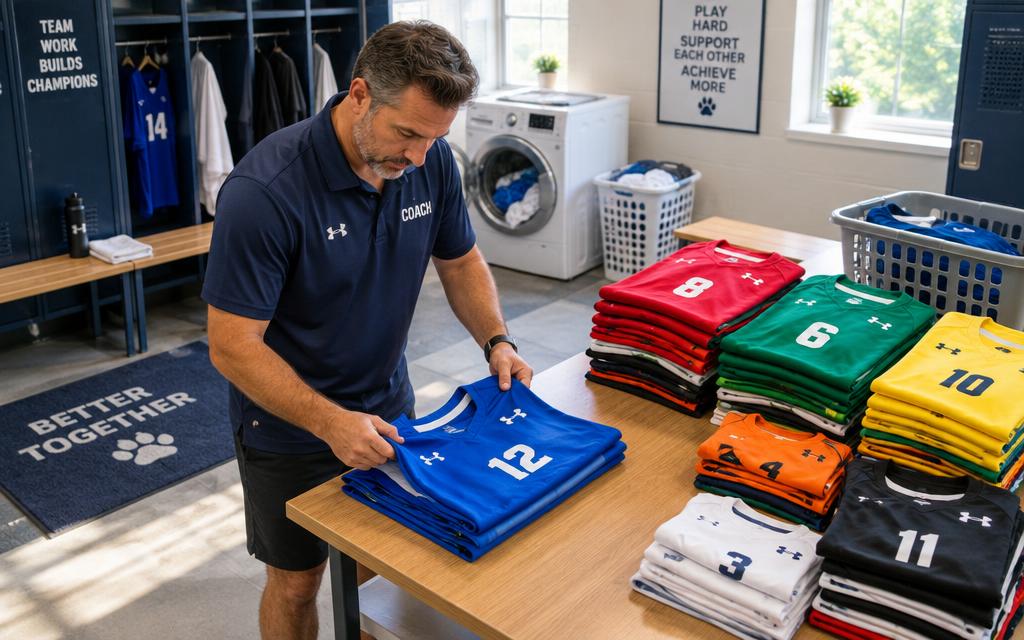
For polyester team gear with full-color art, sublimation lasts the full season; for bold cotton shirts, screen printing does.

Sublimation printing vs screen printing is a choice many coaches face before the season starts. Picture a coach who washes team apparel every week, from the first practice to the last game. Sublimation is a process where heat turns solid dye into gas that bonds with polyester fibers instead of sitting on the surface. Screen printing pushes thick ink through a mesh stencil, so the ink sits on top of the fabric.
A full-color sublimated kit suits polyester gear, while a bulk screen print suits bold cotton tees. Each method has its own answer to a season of washing and to print durability. Pick the method by fabric first, because no print method survives on a fabric it does not bond with.
Key Takeaways
- Sublimation bonds dye with polyester fibers, so it holds up well on polyester gear.
- Screen printing works on cotton, polyester and most blends.
- Sublimation cannot print white on dark fabric.
- Screen printing is usually cheaper per shirt on bulk orders.
- Standard screen printing takes 7-10 business days.
- Choose the method by fabric before you look at design or cost.
Sublimation printing vs screen printing: fabric and garment fit
Sublimation needs polyester or a polymer-coated item, while screen printing goes on cotton and most blends. A polymer-coated item is a blank with a special coating that takes the dye, such as a mug or a tile. The fabric choice comes first, before design or cost.
Fabrics that take sublimation
The dye bonds with polyester, so the garment must be polyester or a coated blank. Polyester-spandex blends used for sublimation usually contain 80-92% polyester and 8-20% spandex. Many custom compression shirts use that stretch blend.
- 100% polyester jerseys and tees
- Polyester-spandex blends, usually 80-92% polyester
- Nylon, with less color depth than polyester
- Polymer-coated items such as mugs and tiles
Fabrics that take screen printing
Screen printing works on cotton, polyester and blends, so it covers far more garments. A 100% cotton tee cannot take sublimation, since cotton does not hold the dye. Spandex-rich fabric can crack under a screen print unless stretch additives are mixed into the ink.
- Cotton tees and hoodies
- Cotton-polyester blends
- Polyester, printed with plastisol or water-based ink
Sublimation prints only on polyester or a polymer-coated item, so the fabric decides the method.
Slick or very dark fabrics need the right ink and a proper cure before a screen print will hold. Check the fabric label before ordering, since a cotton blend with little polyester gives a faint sublimated print.
How the two methods produce color and detail
Sublimation prints full-color photos and gradients, but it cannot show white on a dark garment. No ordinary printer can do sublimation, because the job needs sublimation ink, a sublimation printer, transfer paper and a heat press. A sublimated graphic is a design that heat moves into the fabric.
Full-color art and gradients
Heat at about 350-400 degrees Fahrenheit pushes the dye into the fibers, so the color sits inside the fabric. Smooth gradients and fine detail come through clearly, which makes sublimation strong for photos. Screen printing uses a separate screen for each color, so each added color adds a setup step and a cost.
| Feature | Sublimation | Screen printing |
|---|---|---|
| Color range | Full-color, no screen limit | Limited by the number of screens |
| Gradients | Smooth blends | Grainy dots unless designed for halftone |
| Photos | Yes, with fine detail | Simplified, with fewer tones |
| Dark garments | Poor, since white is missing | Good, with a white underbase |
| Detail | Fine lines and small text | Clean lines, limited by the mesh |
Dark garments and white areas
Sublimation dye is translucent, so the color takes on the shade of the fabric beneath it. A white design on a black tee simply cannot be sublimated. Screen printing can lay down a white underbase first, so bright colors show on dark fabric. Test a small sample on the actual fabric color before ordering a full run.
What each method costs and what goes wrong
Screen printing is cheapest per shirt on a bulk order, while sublimation carries no per-color setup charge. The main disadvantages of screen printing are the setup cost on small runs and the limits on full-color art. Setup runs about $15-35 per color, so a short run carries a heavy price per shirt.
A screen print order of 12 shirts can cost about $14-24 per shirt including setup in a short run. A standard screen-printed shirt in bulk costs about $5-15 all-in, and the setup cost per shirt falls as volume rises. A second print location adds about $1.50-3.50 per shirt per side plus a $15-30 screen charge.
Sublimation has no per-color charge, and reorders need no setup fee. Most screen prints use plastisol, an ink that is not biodegradable, though water-based inks are an option. Five common mistakes cause most of the trouble with these two methods.
- Ordering screen prints under 24 pieces
- Skipping a sample before the full run
- Sending a cotton order for sublimation
- Adding too many colors to the design
- Leaving out the white base on dark fabric
A guide to avoiding design and production mistakes on team uniforms covers the same traps. Ask for the setup fee and the per-shirt price in writing before approving a screen print.
Which lasts longer through repeated washing
On polyester, sublimation outlasts the garment itself. A screen print typically lasts 50-100+ wash cycles with quality ink and proper curing. Sublimation lasts longer than screen printing on polyester, because its dye becomes part of the fiber and does not crack, peel or fade from the surface.
How long does a screen print last on a team shirt? It depends on the cure and the care, and the washing routine decides most of the durability. A full season of weekly washing comes to about 30 washes.
Care steps for screen prints
Under-curing shortens a screen print, so a full cure matters before the first wash. Hot water, harsh detergent, bleach and high-heat drying all shorten it too.
Care steps for sublimated gear
Sublimated gear has no surface layer to crack, so the fabric is what needs care. Sports gear, from jerseys to a custom drawstring backpack, keeps its colors with simple care. Wash inside out in cold water, since heat is the main reason screen prints crack early.
How long each method takes from order to delivery
Standard screen printing takes 7 to 10 business days, and a rush adds 15 to 25 percent. Sublimation takes longer per piece, because each garment needs its own transfer sheet. Shipping time comes on top of production, so a deadline needs both.
A rush order of screen prints adds the surcharge to the total, so count it before you approve the order. A rush cut to a 4-to-5-day run is the usual way to save time. Ask the shop for the rush price in writing before the art is final.
Sublimation time grows with piece count, since each garment needs its own transfer sheet and a press cycle. A 40-piece order takes noticeably longer than a 12-piece order. Build the season deadline around the standard run plus shipping, with a few days to spare. Order at least three weeks before the first game so a reprint fits the schedule.
Which method fits a team, a fundraiser or a small batch
For a team of 12 in full-color jerseys, sublimation is the better buy; for 200 one-color cotton tees, screen printing is. On a small order, sublimation printing avoids the per-color setup fee that makes screen printing costly. Sublimation suits small batches and one-off pieces, such as a single jersey for a coach.
| Order size | Colors | Fabric | Typical use | Winner |
|---|---|---|---|---|
| 12 pieces | Full color | Polyester | Team jerseys | Sublimation |
| 24 pieces | 2 colors | Polyester | Practice jerseys | Sublimation |
| 200 pieces | 1 color | Cotton | Fundraiser tees | Screen printing |
Team jerseys and small runs
Team uniforms with photos or gradients suit sublimation, because the design needs no setup per color. A team of 12 pays for the transfer work on each piece, not for screens. Screen printing is cheaper per shirt on orders of 24 or more, so a team of 12 with full-color art should not screen print.
Bulk cotton orders
A two-color front print on a mid-range cotton tee costs about $3-5 per shirt for orders of 500 or more before setup. Screen printing is the better fit when the quantity is high and the fabric is cotton. Baseball teams often compare uniform design ideas before they settle on a color count. Count the colors and the pieces before choosing, since two colors on 24 shirts can flip the answer.
Choosing the method for your design and your season
Start with the fabric, because it removes one of the two methods before design or cost matter. Screen printing is not outdated, and it remains the most cost-effective choice for bulk cotton orders. The right pick still depends on the design and the gear the season demands.
Work through four checks in order, and stop at the first one that settles the choice:
- Fabric: polyester or a polymer-coated item points to sublimation; cotton points to screen printing.
- Design colors: count them, and check whether any white sits on dark fabric.
- Quantity: 24 or more pieces on cotton favors screen printing.
- Season length: a full season of weekly washing needs a print that holds up through the wash.
A club can sublimate polyester jerseys and screen print cotton tees for fans in one order. Each garment then gets the method that fits its fabric. If the fabric is blended and the design has many colors, request a sample of each method before ordering.
Making each print last a full season
The most effective season plan is to wash every garment inside out in cold water. Teams that order custom volleyball uniforms often choose polyester-spandex blends, which follow the same routine.
Washing routine for the season
A steady routine protects the print life of every garment on the roster. Wash on the same cycle each week so no garment sits dirty and gets scrubbed harder later.
- Wash inside out to protect the print surface.
- Use cold water and a mild detergent.
- Tumble dry on low, or hang dry.
- Store garments flat between games.
Hot garments stacked in a dryer age both kinds of print faster than almost any other habit.
Storage between games
Keep the bag open and airy between games, not sealed while anything is damp. Store garments flat and dry, since folded damp shirts crack the print in storage.
Conclusion
Sublimation printing vs screen printing comes down to fabric, and the verdict stays simple. On full-color polyester gear, sublimation is the method that lasts a full season, with the color locked into the fiber.
On bold cotton orders, screen printing gives the best price per shirt and holds well with good ink and care. Request a sample of each method on your real fabric before placing the season order.
FAQ
Which lasts longer through a full season, sublimation or screen printing?
On polyester, sublimation lasts longer, since the dye bonds with the fiber and outlasts the garment. A well-cured screen print on cotton holds about 50-100+ washes. A full season of weekly washing comes to about 30 washes, so both methods can last a season when they are cared for.
Is sublimation printing better than screen printing for team jerseys?
Yes, for full-color polyester jerseys, sublimation is the better pick. It prints photos and gradients with no per-color setup charge. Screen printing is cheaper per shirt for bold one-color cotton tees, especially on orders of 24 or more.
Can sublimation be used on cotton?
No, cotton does not bond well with sublimation dye, so the print can look faint and wash out quickly. Use a polyester garment or a polymer-coated item instead. A cotton-blend shirt with little polyester gives a faint sublimated print too, so check the label before ordering.
How much does a screen-printed shirt cost in bulk?
A standard screen-printed shirt in bulk costs about $5-15 all-in. The price per shirt drops as the quantity rises, because the setup cost for each color is spread over more shirts. Each extra color and a second print location raise the price further.
How long does a screen print take to produce?
Standard screen printing production takes 7 to 10 business days. A rush that cuts the run to 4 to 5 days may add 15 to 25 percent to the order. Sublimation takes longer per piece, since each garment needs its own transfer sheet, so plan the shipping time too.


