

Cart
1
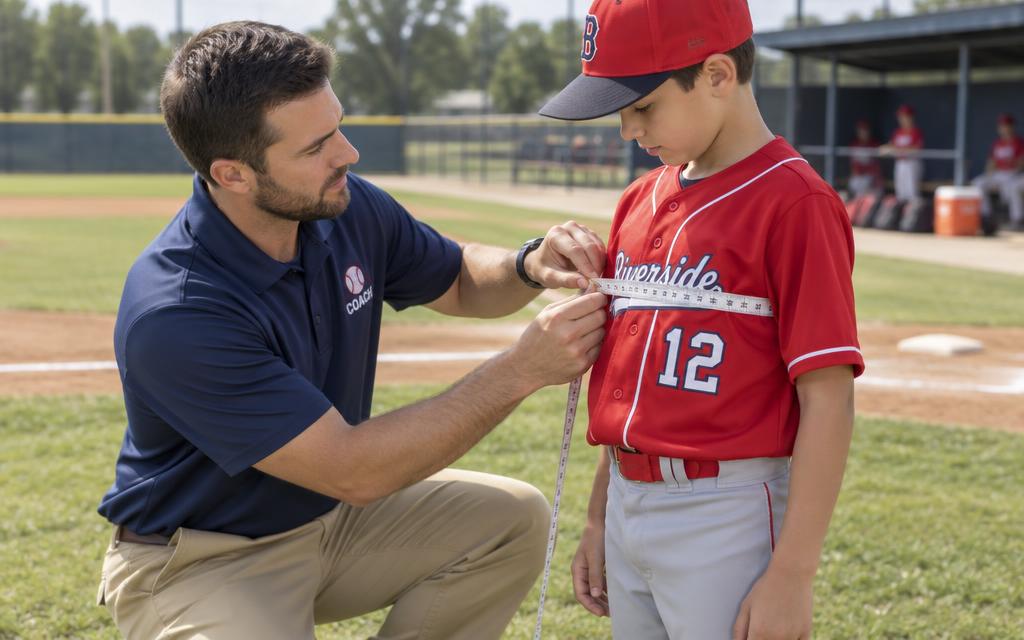
A baseball jersey is sized by chest measurement, and the right jersey size is the one that matches the chest on the product's own size chart. Body length is the second number to check before any order goes in. Picture a coach handing out twelve jerseys on picture day, only to find half of them hang like tents.
A flat measurement is a garment measured laid flat and smooth, edge to edge, and it is not the same number as a body measurement taken on the player. The youth size range runs from XS to XL with chest ranges of 22 to 34 inches. The adult size range runs from XS to 4XL with chest ranges of 32 to 67 inches.

This guide covers measuring, reading size charts, fit and common errors, so good baseball sizing starts with the numbers below. When a general chart and the chart for the exact product disagree, the product chart wins.
Key Takeaways
- Chest measurement is the main number for a baseball jersey.
- Body length is the second number to check.
- The product's own chart outranks a general chart.
- A flat measurement is not a body measurement.
- Each player needs fresh numbers before ordering.
Keep one written measurement record for each player so every size can be checked against the chart before the team uniform order is submitted.
How to Choose the Right Baseball Jersey Size for Your Team
A player's age is a poor guide to jersey size, because two players of the same age often need different sizes. Chest width, body length and shoulder room all change how a jersey hangs on one body. A team that orders by age usually ends up with a few jerseys that fit well and several that do not.
Brands cut their jerseys differently, so a size that worked last season may not work now. A youth player who wears a medium in one brand may need a large in another. Teams that want a bold look often compare team uniform design ideas before they choose a cut.
Game jerseys need performance room for swinging and throwing. Warm-up jerseys can be looser, since players wear them over other clothes before the game. Decoration needs space too, because numbers and names on the front and back take up part of the chest.
A team order should use each player's real measurements, not T-shirt sizes or age.
Fit preference adds one more layer to the decision. Some players want a close, athletic look, while others want room to move. Shoulder room is easy to miss, since a jersey can fit the chest and still pull at the shoulders if the cut is narrow.
Decide the intended use of each jersey before measuring, because a game jersey and a fan jersey may need different room.
Measuring Chest, Length and Sleeves for an Accurate Jersey Fit
To measure a chest, wrap a flexible tape around the fullest part, under the arms and across the shoulder blades, keeping it level and comfortably loose. The chest measurement is the main number on any baseball jersey chart. Measure over the shirt the player will wear, not over a hoodie or a thick undershirt.
Keep the tape flat against the skin without pressing in. Read the number to the nearest inch and write it down before moving on. A tape pulled tight gives a smaller number, and the jersey will then feel tight through the chest.

Measuring body length and the sleeve
Body length runs from the highest point of the shoulder down to where the jersey should sit. Sleeve length runs from the center back of the neck, over the shoulder point, to the wrist. Round the sleeve up to the next whole number so the sleeve does not stop short.
Why youth and adult measurements are not interchangeable
Youth jerseys are typically shorter and narrower through the chest and shoulders than adult jerseys. A youth XL chest of 32 to 34 inches falls in the adult XS range, yet the youth cut is still shorter and narrower. Use the youth chart for youth players and the adult chart for adult players, even when the numbers look close.
| Youth size | Chest range | Note |
|---|---|---|
| XS | 22"-24" | Smallest youth size |
| S | 24"-26" | Fits smaller youth players |
| M | 28"-30" | Middle of the youth size range |
| L | 30"-32" | Next size up from M |
| XL | 32"-34" | Largest youth size; some charts add 35" or 36" |
Teams that skip measurements often repeat the errors described in a guide on mistakes to avoid when designing custom team uniforms. The guide stresses supplier size charts over assumed sizes.
Write down the chest number and sleeve length on each player's record, so the chart can be checked later without measuring again.
Reading Adult Baseball Jersey Size Charts and Between-Size Decisions
An adult chart matches the chest range to a letter size, and a measurement that falls between two ranges should be settled by the intended fit. Start with the chest range that matches the player's number, then read the fit note beside it. The sizes below show how the ranges and notes line up.

| Adult size | Chest range | Fit note |
|---|---|---|
| XS | 32"-34" | Smallest adult size |
| M | 38"-40" | A Nike replica jersey chart lists a 32"-34" waist here |
| L | 41"-43" | Middle of the adult size range |
| XL | 44"-46" | Next size up from L |
| 4XL | 54"-67" | Largest adult size |
Numeric jersey sizes work differently from letter sizes. A number such as 44 refers to chest inches, so size 44 corresponds to a 42"-44" chest.
When a measurement falls between two sizes, choosing the smaller size gives a tighter fit, and the next size up gives a looser fit. A player who wants a close, athletic look should pick the smaller size. A player who wants room to move should pick the larger one.
Check the chart of the exact garment before deciding, because numeric and letter sizes do not always line up across brands.
Matching Jersey Cut and Layering to the Player
The right cut matters as much as the right chest number, because a jersey worn over a base layer needs room the bare-body measurement does not provide. A compression undershirt beneath a jersey calls for about an extra inch of chest room. The cut decides how that room is spread across the chest, arms and waist.
Traditional loose, athletic and layered fits
A traditional loose fit hangs away from the body and suits players who wear a layer under the jersey. An athletic fit sits closer and suits players who want less fabric moving on them. A basketball guide on basketball uniform design ideas compares standard, slim and relaxed fits in the same way, including their mobility and airflow trade-offs.
| Fit | Best for | Sizing approach | What to check |
|---|---|---|---|
| Traditional loose | Players who wear a layer under the jersey | Size from chest, then add room | Shoulders and sleeve length |
| Athletic | Players who want less fabric to move | Size to the chest with little extra room | No pulling across the chest |
| Layered (compression) | Players who wear a compression undershirt | Add about 1 inch of chest room | Room under the arms |
Have each player test the fit before the order is set. A jersey should not pull across the chest or bind at the arms. Ask the player to try these movements in the jersey:
- Raise both arms overhead.
- Rotate the shoulders in full circles.
- Simulate a swing.
- Simulate a throwing motion.
Men's and women's jersey cuts
Men's jerseys generally use a straighter torso cut, so the body runs close to the same width from chest to hem. Women's jerseys taper at the waist. Sizing up is a common step for a hoodie worn under a jersey, since the hoodie adds bulk through the chest and arms.
Confirm the cut before collecting final sizes so every player's choice follows the same fit definition.
Baseball Pant Sizing: Waist, Inseam and Silhouette
Pants are sized on their own measurements, because a player can wear the right jersey size and still need a different pant length. Waist, inseam and silhouette each have their own method and their own common mistake. Check each one separately before the order goes in.
| Measurement | Method | Common mistake |
|---|---|---|
| Inseam | Top of inner thigh to bottom of ankle, tape straight | Tape bent along the leg |
| Waist | Natural waistline, tape kept a little loose | Tape pulled tight |
| Silhouette | Baggy or tapered, chosen by the lower leg | Choosing by the jersey cut |
Inseam from inner thigh to ankle
Measure the inseam from the top of the inner thigh down to the bottom of the ankle. Keep the tape straight along the inside of the leg while the player stands with feet about shoulder width apart. Two players may share a waist size but need different inseams, so never assume one number covers both.

Waist and silhouette choices
Measure the waist at the natural waistline with the tape kept a little loose. Baggy and tapered silhouettes differ in the lower leg, since baggy pants carry more fabric there and tapered pants fit closer to the ankle. Measure youth pants close to the order date, because young players can grow between fitting and delivery.
Measure both legs if a player's posture looks uneven, so the hem sits correctly over the cleats.
Fitting Baseball Caps by Head Circumference
Head circumference is the reliable starting point for a cap, because a player's old cap size may not match a new style. Measure around the widest part of the head, just above the ears and across the eyebrows. Fitted caps commonly use fractional sizes from about 6 7/8 through 7 3/4.

No soft tape? Wrap a string around the head at the same spot, mark where it overlaps, then measure the string with a ruler. Keep the string level so the mark matches the widest point.
A fitted cap comes in one set size, so the fraction must match the head. An adjustable cap uses a strap or buckle, so one style can fit a range of heads. A fitted cap that is too small can leave a visible mark, and one that is too large can shift during play.
Team caps should match the jerseys and pants in color. A guide to baseball uniform color schemes explains how to coordinate those pieces across a team.
Remeasure growing players before each season, since a fitted cap that fit last year can become tight.
Ordering a Team Uniform Without Costly Sizing Errors
Most costly uniform problems come from old measurements and rushed late additions, not from the jersey itself. One wrong size can hold up a whole team order. Check every size and every name before the order goes in.
Under NFHS rules, each back number must be at least 8 inches high, and no two players on one roster may share a number.
Settle the numbers before the artwork is approved, since a change after approval costs time and money.

Rules to check at the design stage
Vector files can be resized without losing clarity, which helps when a number must fit a new back panel. Check that the files open in the printer's software before approval, as a guide to vector design for print projects explains.
- Take fresh measurements for every player before the order.
- Approve one final roster before any artwork is locked.
- Keep each manufacturer logo within 2 1/4 square inches per item.
- Confirm that each pitcher's undershirt sleeves are not white or gray.
Ordering calendar and minimums
Custom baseball uniforms usually take about 6 to 10 weeks from approved art to delivery. Team orders often start at a 10-piece minimum, so count the players before submitting. Ask the provider for a delivery schedule, since timing depends on order quantity, as a guide to custom baseball uniform trends notes.
Submit the roster only after every size is confirmed against the chart, and set the in-hand date separately from the first game date.
Conclusion
A correct baseball jersey size comes from a current chest measurement matched to the exact product's baseball jersey size chart. Two habits carry the whole process: measure fresh each season, and read the chart printed for the garment being ordered. A player's age or a familiar T-shirt size can point the wrong way.
Start with players who have grown since the last order, since their old numbers are the easiest to get wrong. Measure each player this week and check the roster against the chart before placing the order.
FAQ
How do you size a baseball jersey?
Measure the chest at the fullest point, under the arms and across the shoulder blades, then match that number to the exact product's size chart. Keep the tape level and read it to the nearest inch. Confirm the cut before ordering, because a loose fit and an athletic fit can use the same chest number in different ways.
Should a youth baseball jersey be sized up?
Size up only when the chart places the player between two sizes and the cut leaves room for growth without too much length. A jersey that is too long can bunch at the hips and look untidy. If the player wants a close, athletic fit, the smaller size is usually the better choice.
How much room should a jersey have for a hoodie?
Allow about an extra inch of chest room, or go up one size when a hoodie will be worn under the jersey. A jersey worn over a hoodie can pull across the chest and bind at the arms. Test the fit by raising both arms before the order is set.
How do I measure a baseball pant inseam?
Measure from the top of the inner thigh straight down to the bottom of the ankle, with the tape vertical and the player standing straight. Keep the tape along the inside of the leg. Two players may share a waist size but need different inseams, so measure each player separately.
Do baseball jersey sizes match across brands?
No, each brand's chart uses its own ranges, so the same letter size can fit differently. A youth player who wears a medium in one brand may need a large in another. Compare your measurements with the chart for the exact product before ordering, and do not assume an old size still fits.
How long does a custom baseball uniform take?
Custom baseball uniforms usually take about 6 to 10 weeks from approved art to delivery. Order early so the uniforms arrive before the season starts. Team orders often start at a 10-piece minimum, so plan the player count before submitting.


