

Cart
0
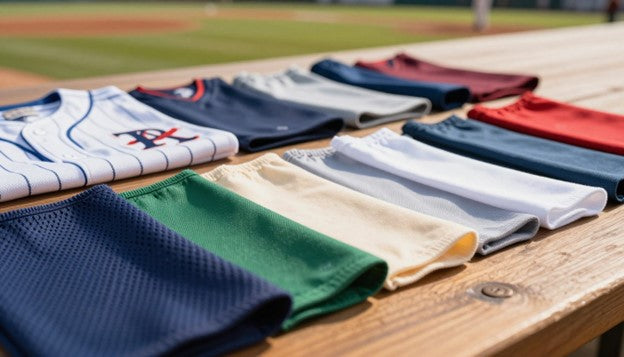
Have you ever wondered why some baseball uniforms feel lighter, cooler, or more flexible than others? The fabric choices behind these uniforms play an important role in player comfort, durability, mobility, and overall performance on the field.
In modern baseball, polyester is the dominant material for many jerseys and pants because it is lightweight, durable, quick-drying, and well suited to moisture-management technologies. Players need clothing that can handle running, throwing, crouching, sliding, and long periods outdoors without becoming unnecessarily heavy or restrictive.
Modern Major League uniforms provide a useful example. MLB and Nike introduced the Vapor Premier chassis across MLB uniforms in 2024. Its lightweight fabric was made with at least 90% recycled polyester yarns and engineered to improve moisture management, fit, and mobility. MLB also reported 25% more stretch and 28% faster drying compared with the previous chassis. MLB and Nike Vapor Premier uniform details
Traditional materials such as wool and cotton also have an important place in baseball history. The National Baseball Hall of Fame traces the sport's progression from early wool and flannel uniforms to polyester becoming the preferred fabric for modern baseball apparel. American History Through Baseball Uniforms
From jerseys and pants to socks and performance layers, each component has different material requirements. Understanding those differences can help teams choose uniforms that balance comfort, durability, weather conditions, and appearance.

Key Takeaways
- Polyester is the primary material in many modern baseball uniforms.
- Traditional fabrics such as wool and cotton remain important historically and in specific apparel applications.
- Jerseys generally prioritize lightweight construction, breathability, and moisture management.
- Baseball pants require greater durability and flexibility because of sliding, running, and field contact.
- Synthetic blends can add stretch and improve freedom of movement.
- Weather conditions should influence fabric weight, ventilation, and layering choices.
- Every component, from jerseys to socks, contributes to player comfort and mobility.
Understanding Baseball Uniform Requirements
The right design and material can significantly improve how a baseball uniform feels during play.
Baseball requires repeated movements such as:
- Running
- Throwing
- Fielding
- Sliding
- Diving
- Crouching
- Batting
- Rotational movement
Because of these demands, jerseys and pants do not necessarily need the same fabric construction.
Baseball Jersey Materials
Baseball jerseys are commonly made from lightweight polyester knit, mesh, or interlock fabrics.
These materials are popular because they can provide:
- Breathability
- Moisture management
- Lightweight comfort
- Quick drying
- Shape retention
- Durability through repeated use
- Compatibility with sublimation
Modern MLB jerseys illustrate how far performance polyester has developed. Nike's current MLB Limited jerseys use 100% recycled polyester, double-knit mesh construction, and moisture-wicking Dri-FIT ADV technology. Nike MLB performance jersey materials
Baseball Pants Materials
Baseball pants typically need more abrasion resistance because players frequently slide, dive, kneel, and make contact with dirt or turf.
Many modern designs therefore use durable polyester or polyester-based stretch fabrics, sometimes with reinforced high-stress areas.
Nike's current Vapor Premier baseball pants, for example, use lightweight, movement-friendly polyester construction and Dri-FIT ADV moisture-management technology. The product is made with at least 75% recycled polyester fibers. Nike Vapor Premier baseball pants
The goal is not simply to make the uniform strong. The fabric must protect against normal game-day wear while still allowing the athlete to move naturally.
Exploring Common Fabrics in Baseball Uniforms
Different materials provide different combinations of comfort, durability, flexibility, temperature control, and moisture management.
Polyester and Synthetic Blends
Polyester stands out as the most common material in modern baseball apparel.
Its advantages include:
- Lightweight construction
- Quick drying
- Good durability
- Moisture-wicking compatibility
- Shape retention
- Easy customization
- Suitability for sublimation printing
Many baseball pants also use reinforced sections around high-wear areas such as the knees.
Synthetic blends may incorporate stretch fibers such as spandex or elastane to improve mobility and recovery. This is especially valuable around the hips, thighs, shoulders, and other areas where unrestricted athletic movement matters.
Sports Custom Uniform itself uses performance-oriented polyester in its baseball range. Its Custom Baseball Uniform Set lists 100% polyester moisture-wicking mesh or interlock fabrics from 130-180 GSM, alongside a heavier stretch option.
Wool and Cotton: Traditional Choices
Wool and cotton have a much longer history in baseball.
Wool was widely used in traditional baseball uniforms because it provided warmth, structure, and durability. The Baseball Hall of Fame notes that Major League teams eventually transitioned from wool and flannel to synthetic fabrics, with every club moving away from flannel during the early 1970s.
Cotton remains soft and comfortable, but it absorbs and retains more moisture than performance polyester. That can make it less suitable as the primary fabric for intense play in hot or humid conditions.
Each material therefore has different strengths:
- Polyester: lightweight, durable, quick-drying
- Polyester blends: added stretch and flexibility
- Wool: warmth and historical authenticity
- Cotton: softness and casual comfort

What Are Baseball Uniforms Made Of? A Closer Look at Material Selection
Not every piece of a baseball uniform experiences the same stresses.
That is why good uniform design considers the garment's specific role rather than using one fabric weight for everything.
Jerseys Need Lightweight Performance
Baseball jerseys benefit from fabrics that support:
- Airflow
- Sweat management
- Shoulder mobility
- Quick drying
- Low overall garment weight
Lightweight polyester mesh and interlock fabrics work particularly well for these needs.
Pants Need More Durability
Baseball pants face substantially more direct abrasion.
Sliding into bases, kneeling, diving, and contact with dirt or artificial turf put greater stress on areas such as the:
- Knees
- Thighs
- Seat
- Hips
- Seams
For this reason, pants commonly use more robust polyester constructions or stretch fabrics designed to withstand repeated movement and abrasion.
Stretch Improves Mobility
Polyester-spandex or similar stretch constructions can help a garment move with the athlete instead of pulling against the body.
This matters during:
- Lateral movements
- Sprinting
- Deep fielding positions
- Batting rotation
- Sliding
The ideal fabric therefore depends on where it is being used and what that garment needs to withstand.

Optimizing Performance in Different Weather Conditions
Weather conditions can dramatically change how a baseball uniform feels.
Choosing the right material and fabric weight helps players manage heat, sweat, wind, and cooler temperatures more comfortably.
Hot-Weather Baseball
During hot games, moisture management and ventilation become priorities.
Lightweight polyester can help move moisture away from the skin and dry more quickly than absorbent natural fabrics.
Useful design features include:
- Lightweight mesh
- Ventilated panels
- Moisture-wicking fabric
- Lighter fabric weights
- Breathable undershirts
Sports Custom Uniform's custom baseball uniforms collection specifically uses high-grade moisture-wicking polyester and engineered mesh panels in high-heat areas such as the back and underarms.
Cool-Weather Baseball
For colder conditions, layering becomes more important.
A moisture-wicking base layer can help move perspiration away from the skin, while warmer outer layers provide insulation between innings or during lower-activity periods.
Historically, wool provided significant warmth in baseball uniforms, although modern teams generally rely on synthetic performance layers and outerwear rather than traditional heavy wool uniforms.
Does Uniform Color Affect Heat?
All else being equal, darker colors tend to absorb more solar radiation, while lighter colors generally reflect more of it.
Fabric construction, airflow, humidity, fit, and direct sunlight also affect how hot a uniform feels, so color should be treated as one factor rather than the only consideration.

Integrating Design Features for Enhanced Functionality
Fabric is only one part of a performance baseball uniform.
Construction details determine how well that material survives repeated practices, games, washing, stretching, and field contact.
Reinforced Stitching
High-stress seams benefit from stronger construction.
Quality baseball apparel commonly reinforces areas that experience repeated tension, especially around:
- Shoulders
- Armholes
- Side seams
- Waistbands
- Knees
- Seat areas
Sports Custom Uniform states that its baseball uniforms use reinforced seams designed to withstand demanding play.
Reinforced Baseball Pants
The knees and thighs often experience direct contact with the ground during slides and fielding.
Durable fabric and appropriate reinforcement help protect the garment from premature tearing.
Stretch Panels and Flexible Fabrics
Stretch fibers can improve fit without making the uniform restrictive.
A well-designed uniform should allow players to:
- Swing freely
- Extend their arms
- Sprint
- Squat
- Slide
- Change direction quickly
Sleeves and Accessories
Compression-style sleeves can provide additional coverage and moisture management and are commonly worn as performance accessories.
Batting gloves are another functional accessory. They commonly use leather or synthetic palm materials to improve grip, comfort, and protection while batting.
Padded moisture-wicking socks can also improve comfort inside cleats and help manage sweat during longer games.

Customization, Branding, and the Modern Uniform Look
Customizing uniforms helps transform performance clothing into a recognizable team identity.
Baseball jerseys commonly display:
- Team logos
- Player names
- Player numbers
- Team colors
- Sleeve graphics
- Sponsors
- Piping
- Pattern details
These elements make uniforms easier to recognize while giving players a consistent visual identity.
Why Sublimation Works Well With Polyester
Sublimation is particularly well suited to polyester-based uniforms.
Instead of adding a thick graphic layer on top of the garment, sublimation transfers dye into the polyester material. This allows teams to incorporate:
- Gradients
- Detailed patterns
- Multiple colors
- Logos
- Numbers
- Player names
- Sponsor graphics
without adding the same type of raised print layer associated with some traditional decoration methods.
Sports Custom Uniform's Custom Baseball Uniform Set uses full sublimation on performance polyester and supports custom team names, player names, numbers, logos, sponsor graphics, and multiple jersey styles.
For teams still deciding how materials should work with colors, typography, numbers, and layout, the previous Sports Custom Uniform article Baseball Uniform Design Ideas for Teams That Stand Out includes a dedicated fabric-selection section covering lightweight mesh, double-knit polyester, and performance stretch materials.
For broader historical context, The Evolution of Sports Uniforms: From Basic to Fully Custom Designs explains how athletic clothing progressed from heavy traditional fabrics to polyester, moisture-wicking textiles, breathable mesh, stretch fibers, and modern customization.
These are the two previous relevant blogs, placed where their subject matter naturally extends the current discussion.
Coordinating the Full Team Look
Branding can extend beyond the game jersey.
| Item | Function | Branding Opportunity |
|---|---|---|
| Jerseys | Player identification | Logos, names, numbers |
| Tracksuits | Warm-up attire | Team colors, logos |
| Hoodies | Casual/team wear | Names, logos |
| Backpacks | Gear organization | Team branding |
A coordinated system helps the organization maintain the same visual identity on and off the field.

Choosing the Right Baseball Uniform Material for Your Team
The best material is not necessarily the heaviest, lightest, or most expensive option.
Teams should consider:
Climate
Hot-weather teams may prioritize lighter mesh and ventilation.
Cooler-weather programs may prefer slightly heavier fabrics or additional layering options.
Level of Play
Competitive and travel teams typically need materials that tolerate frequent games, washing, and travel.
Player Movement
Stretch becomes more valuable when players need aggressive mobility without fabric restriction.
Jersey vs. Pants
A lightweight jersey and a more durable pair of pants often make more sense than using identical fabric constructions throughout the uniform.
Printing Method
Sublimation works naturally with polyester and allows complex graphics without applying thick surface layers.
Budget and Replacement Cycle
Teams should consider not only initial price but also how often the uniforms will be worn, washed, and replaced.
If you're ready to compare actual options, the Custom Baseball Uniform Set – Name, Number, Color & Any Size is particularly relevant to this article because its product specifications list the available polyester mesh, interlock, and stretch fabric constructions.
Conclusion
Choosing the right materials is essential for creating baseball uniforms that perform well throughout games and practices.
Polyester and synthetic blends dominate modern baseball because they offer a strong combination of:
- Moisture management
- Quick drying
- Durability
- Lightweight comfort
- Stretch
- Customization compatibility
Historical materials such as wool and cotton remain important to the evolution of baseball apparel, but today's performance demands favor modern synthetic construction for most game uniforms.
Jerseys generally benefit from lightweight, breathable polyester. Pants need more abrasion resistance and may incorporate stretch materials to support running, fielding, and sliding.
Weather also matters. Hot-weather teams should prioritize ventilation and moisture management, while cold-weather players can combine performance base layers with warmer outerwear.
Finally, material selection should work together with fit, reinforced construction, team branding, number visibility, and the chosen decoration method.
For teams looking to create their own uniform system, Sports Custom Uniform offers customizable baseball uniforms designed around performance fabrics, player names, numbers, logos, colors, and team identity.
The best baseball uniform is ultimately one that balances comfort, body-temperature management, durability, mobility, and a professional team look.
Frequently Asked Questions
What materials are commonly used in baseball uniforms?
Modern baseball uniforms are primarily made from polyester and polyester-based performance fabrics.
Jerseys may use lightweight mesh or interlock polyester, while pants often use more durable polyester or stretch blends. Cotton and wool remain important historically and can still appear in casual, retro, or specialty apparel.
How do uniforms affect player performance?
Uniforms affect comfort, mobility, temperature management, and how easily a player can move.
A properly fitted uniform made from suitable performance fabric can reduce unnecessary restriction and help manage perspiration during games.
Why is moisture management important in baseball gear?
Baseball is often played outdoors for extended periods.
Moisture-wicking materials move perspiration away from the skin toward the outer surface of the fabric, where it can evaporate more efficiently. This can help prevent a uniform from feeling unnecessarily wet and heavy.
What are the benefits of using synthetic fabrics?
Modern synthetic fabrics can provide:
- Quick drying
- Durability
- Moisture management
- Lightweight construction
- Stretch
- Shape retention
- Compatibility with sublimation
These characteristics make polyester particularly useful for modern baseball uniforms.
How can uniforms be customized for teams?
Teams can customize uniforms through:
- Colors
- Logos
- Player names
- Numbers
- Piping
- Patterns
- Sleeve graphics
- Sponsors
- Sublimated designs
Polyester-based sublimated uniforms provide especially broad design flexibility.
What role does fit play in a player's comfort?
A properly fitted uniform should allow natural movement without excessive tightness or loose fabric interfering with play.
Sizing, stretch, cut, sleeve design, and pants construction all affect mobility.
How do teams maintain their uniforms?
Follow the care instructions provided for the specific uniform.
In general, appropriate washing, avoiding unnecessary high heat, and following the manufacturer's drying and decoration-care instructions help preserve fabric, stitching, numbers, and colors over time.


