

Cart
0
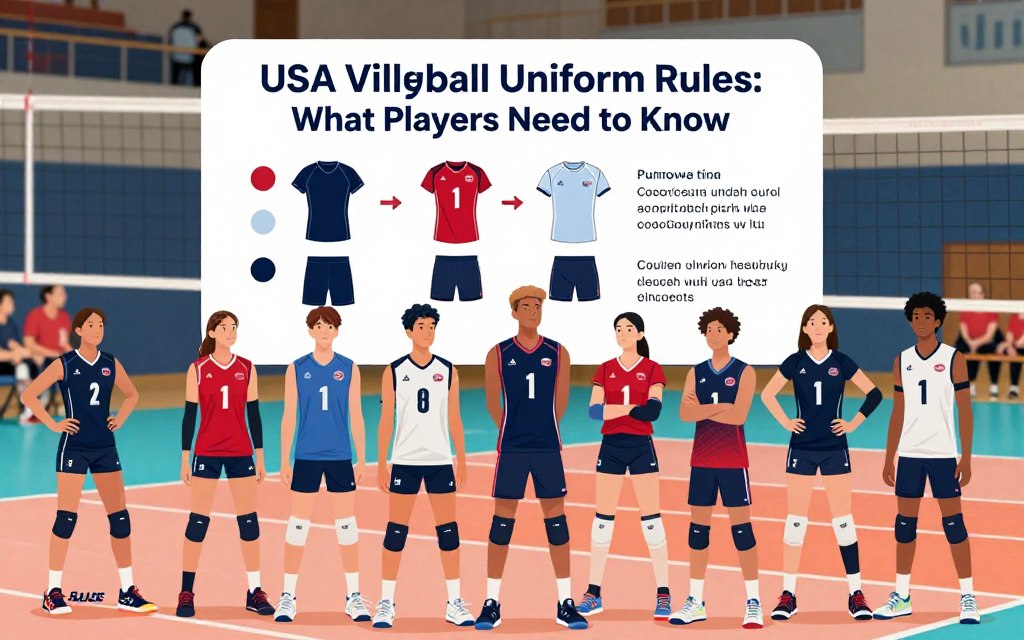
Have you ever wondered why certain jersey numbers are banned in competitive play? Understanding the intricacies of uniform guidelines is crucial for players and teams alike. These regulations are not just arbitrary; they ensure fairness and clarity during matches.
This guide delves into the essential rules surrounding team attire, focusing on jersey specifications. From the necessary dimensions of numbers to the color contrasts required for the Libero, each detail plays a significant role in the game. Compliance with these standards can impact not only a player's performance but also their team's cohesion.
Whether you are a player, coach, or fan, knowing these rules can enhance your appreciation of the sport. Let's explore the key aspects of uniform regulations that every player should be aware of.

Key Takeaways
- This guide covers the current uniform regulations for teams.
- Understand the significance of clearly visible and centered numbers.
- Learn about the legal jersey number range and prohibited numbers.
- Discover the minimum size requirements for front and back numbers.
- Get insights on the Libero jersey and team uniform consistency.
Introduction
Players must familiarize themselves with the updated standards for competitive attire. The latest guidance for the 2024-2025 season was revised on September 20, 2024. This document serves as a practical starting point for teams to review their uniforms before tournaments.
USA Volleyball recommends that teams check the complete and abridged rules books before purchasing jerseys, shorts, pants, or any exposed coordinating undergarments. Understanding the requirements for number size, placement, contrast, and uniform identity is crucial for acceptance.
Early review is especially important for teams planning to attend national qualifiers, bid tournaments, or other significant events. This article will present the guidelines as a practical checklist for players, coaches, uniform buyers, and officials to apply before competition.
Understanding USA Volleyball Uniform Rules
Understanding the standards for team attire is essential for all players. The guidelines outlined in USA Volleyball Rule 4.3 detail the requirements for team uniforms. Compliance with these rules is crucial for participation in sanctioned competitions.
Regular players must wear identical jerseys, with exceptions made for sleeve length and the Libero jersey. This ensures uniformity and clarity during matches. Here are some key points to consider:
- Every team uniform must comply with the current rules book.
- Identical jerseys are generally required, except for sleeve variations.
- Mandatory rules include minimum number sizes and preferred placements.
- Uniform legality is determined by match referees and tournament staff.
- Teams should verify uniform compliance before arriving at events.
Checking uniform legality in advance can prevent issues that may affect participation. Being prepared ensures a smoother experience during competitions.

Detailed Jersey Design Requirements
Every athlete should be aware of the specific design standards for their jerseys. Adhering to these requirements not only ensures compliance but also enhances team identity. The following elements are crucial for jersey design:
Design Elements and Construction
Jersey numbers must be permanent Arabic numerals ranging from 1 to 99. Each number's stripe should be solid and at least three-fourths inch wide. It's essential to use clear fonts, as broken or difficult-to-read styles may not meet the readability expectations.
Material and Fabric Considerations
Choosing the right fabric is vital. The material should prevent folds, shadows, or wetness that could hinder number visibility during play. Exposed T-shirts, tights, sports bras, and bicycle shorts also form part of the team attire under current guidelines. All teammates wearing exposed undergarments must coordinate in the same color, while socks and sport shoes are excluded.
| Element | Requirement |
|---|---|
| Jersey Numbers | Permanent Arabic numerals (1-99) |
| Number Stripe Width | At least ¾ inch wide |
| Font Clarity | Readable, solid design |
| Fabric | No folds or shadows affecting visibility |
| Exposed Garments | Same color for all teammates |
Uniform Numbering Specifications
Jersey numbering plays a pivotal role in competitive sports, influencing how players are identified. Teams may assign numbers from 1 through 99, but they must avoid using 0, 00, or any leading-zero number like 07. This ensures clarity and consistency across the board.
Numbering must be permanent and utilize familiar Arabic forms. This allows scorers, spectators, and tournament personnel to identify each player quickly. The front number requires a minimum height of 4 inches, while the back number must be at least 6 inches high.
For better visibility, USA Volleyball recommends increasing those measurements to 6 inches on the front and 8 inches on the back. Additionally, the solid stripe forming the number must measure at least three-fourths inch wide, excluding any decorative border.
| Specification | Requirement |
|---|---|
| Legal Numbers | 1 through 99 |
| Prohibited Numbers | 0, 00, 00-09 |
| Front Number Height | Minimum 4 inches (recommended 6 inches) |
| Back Number Height | Minimum 6 inches (recommended 8 inches) |
| Number Stripe Width | At least ¾ inch wide |

Visible and Centered Uniform Numbers
Clear and centered numbers on jerseys are crucial for effective player identification. These numbers must be prominently displayed on both the front and back of the jersey. Visibility plays a significant role in ensuring that scorers and spectators can easily recognize players during matches.
Front Jersey Requirements
The front jersey must display a clearly visible number centered from side to side, with a minimum height of 4 inches. A 6-inch front number is recommended because the larger size improves recognition for scorers and spectators across the court.
Back Jersey Requirements
The back jersey must carry a centered number at least 6 inches high, with 8 inches recommended for maximum readability. Additionally, the number’s actual body color must contrast with the jersey. An outline cannot compensate for a low-contrast number.
Designers should inspect both jersey panels from a normal viewing distance to confirm that the number remains identifiable during movement.
Guidelines for Number Placement
Proper placement of jersey numbers is vital for smooth gameplay. USA Volleyball recommends that numbers be positioned on the upper half of the jersey. This ensures that officials can identify players quickly during matches.
Upper Half Placement Recommendation
Numbers should be clearly visible and centered. They must not extend below the player’s waist, even if the design appears centered before wearing. This placement allows for easy recognition by scorers and officials.
Restrictions on Lower Placement
It is essential that numbers are not tucked into uniform bottoms. Concealing numbers can hinder visibility and reliability during gameplay. Teams should test jerseys on actual players in various positions, ensuring the number remains fully visible when standing, bending, or jumping.
- Numbers are recommended for the upper half of the jersey.
- A number may not extend below the player’s waist.
- Numbers may not be tucked into uniform bottoms.
- Teams should test jerseys while ensuring the number remains visible.
- A higher position is generally safer than a low position near the waistband.

Color Contrast and Uniform Legality
The visibility of jersey colors can significantly impact player identification during matches. Ensuring that color combinations are distinguishable is crucial for compliance with team attire guidelines. Here, we explore acceptable and unacceptable color pairings to help teams avoid potential issues.
Acceptable Color Combinations
When selecting jersey colors, teams should aim for combinations that provide clear contrast. This helps ensure that numbers remain visible and identifiable during gameplay. Teams should consider the following:
- Number colors must contrast clearly with jersey colors.
- The contrast should remain adequate regardless of borders, outlines, lighting, or fabric conditions.
Unacceptable and Inadequate Combinations
Some color combinations may not provide sufficient contrast, leading to confusion during matches. The following pairings are specifically identified as potentially inadequate:
- Purple/black
- Dark green/black
- Navy/black
- White/light yellow
- Navy/maroon
To evaluate color visibility, teams can photograph their jerseys and convert the image to grayscale. This will help determine if the dominant colors are distinguishable. Additionally, black/gray combinations may be considered borderline by event officials, so teams should prepare a clearly contrasting alternative jersey.
| Color Combination | Visibility Status |
|---|---|
| Purple/black | Inadequate |
| Dark green/black | Inadequate |
| Navy/black | Inadequate |
| White/light yellow | Inadequate |
| Navy/maroon | Inadequate |
Uniform Adornments and Logo Limitations
Adhering to logo guidelines is essential for maintaining uniformity in team attire. Teams must ensure that any logos or markings comply with established regulations. This not only enhances team identity but also prevents potential issues during competitions.
A single manufacturer logo or trademark on the outside of a jersey or short must not exceed 14.6 square centimeters, which is equivalent to 2¼ square inches. Sponsor logos are allowed as long as they are identical on each uniform and do not obstruct the visibility of the numbers.
Logo Placement and Visibility
Logos may be placed anywhere on the jersey, provided they do not hinder number readability or alter the required contrast. Here are some key points to remember:
- A manufacturer logo must not exceed 14.6 square centimeters.
- Identical sponsor logos are permitted, ensuring they do not obstruct numbers.
- Logos can be placed in various locations as long as numbers remain legally placed and readable.
- Team names, player names, and patches must not reduce number visibility.
- According to NCVF, there are no additional restrictions beyond applicable guidelines, but patches must not render numbers illegal.
| Logo Type | Size Limit | Placement Restrictions |
|---|---|---|
| Manufacturer Logo | Max 14.6 cm² | Must not obstruct numbers |
| Sponsor Logo | Identical on each uniform | Must not hinder readability |
| Team Names/Patches | No specific limit | Must not obscure numbers |

Compliance During Competition
Ensuring compliance with attire standards is crucial during competition. Team members must wear proper uniforms while warming up. This means teams cannot wait until the opening whistle to correct any obvious uniform issues.
Once competition begins, no number changes are permitted. This makes pre-match roster and jersey checks especially important. Match referees, head referees, and tournament staff are responsible for determining whether a uniform can be used.
In case of a uniform dispute, event officials will handle the situation. This is not grounds for an opponent’s protest under the NCVF summary. Therefore, teams should carry compliant alternatives. This is essential when a borderline color combination, number placement, or garment issue could arise on event day.
Libero Specific Uniform Rules
The role of the Libero in a team brings unique uniform requirements that are essential for clarity during play. This player must wear a jersey that clearly contrasts with the dominant colors of their teammates' attire. This distinction helps officials and spectators identify the Libero quickly.
All Libero shirts must feature a legal number, even if the design differs from the regular team jersey. It's important to note that a player who serves as both Libero and another position must use the same number in both roles. This consistency aids in maintaining order and clarity during matches.
Distinctive Libero Jersey Requirements
- The Libero must wear a jersey with a clearly different dominant color from the jerseys worn by teammates.
- Every Libero shirt must carry a legal number, even when the player’s jersey design differs from the regular team jersey.
Number Consistency Across Positions
- A player who serves as Libero and also plays another position must use the same number in both roles.
- The Libero may have a different number color or size, provided the applicable minimum height, stripe width, contrast, and placement rules remain satisfied.
- Teams should compare the Libero jersey against the entire regular lineup rather than against only one teammate’s uniform.
| Requirement | Details |
|---|---|
| Jersey Color | Must contrast with teammates' jerseys |
| Numbering | Must be legal and consistent across positions |
| Design Variations | Allowed if minimum standards are met |
Regulations for Uniform Bottoms and Shorts
Understanding the regulations for athletic bottoms is essential for all players. Regular-player bottoms may differ in style and cut as long as they share the same color. Acceptable styles include spandex, gym-style shorts, pants, and culottes.
While players can wear different lengths and cuts, they must still adhere to the applicable manufacturer-logo, sponsor-logo, and number rules. Any number printed on shorts or pants must match the player's jersey number. However, not every player is required to have a number on their bottoms.
Exposed tights, bicycle shorts, or similar undergarments are considered part of the uniform and must follow the same-color requirement for teammates. It's important to note that under the NCVF summary, socks, sport shoes, knee pads, and compression pads are not treated as uniform components.
Reviewing Official USA Volleyball Rules and Modifications
Understanding the latest modifications to official standards is vital for all players and coaches. USA Volleyball publishes comprehensive and abridged rule books for officials, which serve as essential resources.
The NCVF adopts these guidelines with modifications that help teams transitioning from older varsity uniforms. This ensures that all teams have a fair chance to comply with the latest requirements.
Teams have a maximum of two seasons to adapt to any changes in regulations. It's important to note that any legal NCVF uniform from the 2024 season remains valid unless a waiver or variance was granted.
Since regional and national events may implement different procedures, teams should confirm the specific rules for their tournaments.
| Guideline | Details |
|---|---|
| Consult Current Rules | Refer to the latest USA Volleyball rules book for complete regulations. |
| NCVF Modifications | Adaptations for teams with older uniforms from collegiate programs. |
| Compliance Period | Up to two seasons for teams to meet new uniform standards. |
| Legal Uniforms | 2024 uniforms remain valid without waivers. |
| Event Procedures | Check specific tournament rules for compliance. |

Uniform Submission and Approval Process
The process of submitting jersey designs for approval is crucial for teams preparing for national events. Teams should carefully review their uniform designs before making any purchases, especially if the design includes unusual colors or placements.
USA Volleyball provides a Uniform Approval pathway through its resources for clubs. This allows teams to submit their jersey designs for evaluation. The Rules Interpreter reviews these submissions to ensure general compliance and can assess combinations of Libero and teammate jerseys together.
If a submitted jersey is found to be illegal, the review process can identify the issue before the team reaches a qualifier or national tournament. Therefore, it is vital for teams to retain approval communications and design files. This ensures that coaches and officials can reference the same approved specifications during competitions.
Ensuring Compliance with Uniform Guidelines
It's vital for teams to regularly assess their compliance with uniform guidelines. A thorough self-assessment can help teams avoid issues related to uniform compliance. Here are some tips to guide this process:
Self-Assessment Tips
- Measure front numbers to ensure they are at least 4 inches tall.
- Check back numbers to confirm they are 6 inches or taller.
- Verify that the number stripe is at least three-fourths inch wide.
- Ensure that numbers are centered and positioned in the upper half of the jersey.
- Confirm that the numbers are clearly visible and contrast well with the jersey color.
Coaches should photograph jerseys in normal lighting and convert the images to grayscale. This can help identify weak contrast, especially with colors like dark green or light yellow.
Consultation with Officials
If questions remain, teams should reach out to their region office or the officials chair. Bill Stanley, a USA Volleyball Rules Interpreter, is also available for inquiries regarding uniform compliance. Consulting with officials before competition is crucial, as they have the final say on borderline combinations and match-day legality.
Tips for Creating Legal and Stylish Team Uniforms
Creating team attire that is both stylish and compliant is essential for every player. Designers can craft uniforms that stand out by using bold, high-contrast numbers. The recommended heights are 6 inches for the front and 8 inches for the back. This ensures visibility during matches.
A clean layout should reserve enough space around the number. This way, a 2¼-square-inch manufacturer logo does not interfere with readability. Teams can mix styles for uniform bottoms, including spandex, gym-style shorts, pants, and culottes, as long as the colors match.
Distinctive Libero colors should complement the team palette while remaining clearly different from teammates’ dominant jersey colors. Additionally, player names, team marks, and sponsor elements should be placed only after confirming that the number remains centered, readable, and compliant.
Conclusion
In conclusion, understanding the guidelines for team attire is vital for all players. Key requirements include using permanent Arabic numbers ranging from 1 to 99, with a minimum height of 4 inches for the front and 6 inches for the back. Numbers should be centered, clearly contrasting, and placed on the upper half of the jersey, never extending below the waist.
Regular-player jerseys typically need a consistent design, while the Libero's jersey must contrast distinctly with teammates' colors. Additionally, bottoms can vary in style as long as the required colors match, and any numbers on shorts or pants must align with the jersey number.
Teams are encouraged to review the current regulations, complete a self-checklist, and seek approval before competing at national events.
FAQ
What are the key requirements for jersey numbers?
Jersey numbers must be clearly visible, centered, and placed on the upper half of the front and back of the jersey. They should be identical in color and size for all players.
Can jersey numbers extend beyond the designated area?
Yes, numbers may extend slightly beyond the designated area as long as they remain clearly visible and do not interfere with other uniform elements.
What colors are acceptable for team uniforms?
Acceptable color combinations include dark green, navy, maroon, white, and light yellow. Teams should ensure that colors provide sufficient contrast for visibility.
Are there specific rules for the libero's uniform?
Yes, the libero must wear a distinct jersey that differentiates them from other players. The number must also be consistent with the one listed on the roster.
How should logos and sponsorship markings be handled?
Team logos and sponsorship markings must adhere to specific size and placement guidelines to ensure they do not interfere with the visibility of the jersey numbers.
What is the process for uniform approval?
Teams must submit their uniform designs for approval to ensure compliance with all guidelines before the start of the season.
How can teams ensure their uniforms meet all guidelines?
Teams can perform a self-assessment of their uniforms against the established guidelines and consult with officials for clarification if needed.
What are the restrictions on uniform bottoms?
Uniform bottoms must be consistent in color with the jersey and adhere to length and fit guidelines specified in the regulations.


