

Cart
0
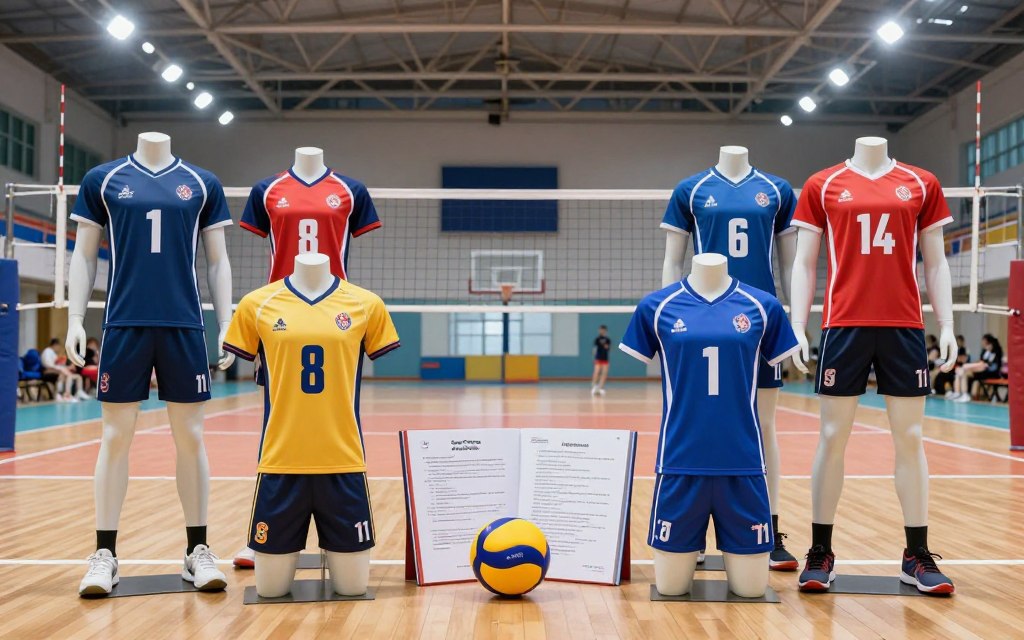
Have you ever wondered how a simple outfit can impact a player’s performance on the court? Understanding the guidelines surrounding team attire is crucial for athletes, coaches, and schools alike.
With the recent updates to the 2024-2025 requirements from USA Volleyball, knowing the ins and outs of these regulations is more important than ever. Each detail, from the color of the attire to the size of the numbers, plays a significant role in ensuring compliance during matches.
This guide will clarify what every player and coach needs to know before making uniform purchases, especially when preparing for national events or state tournaments. By reviewing the latest standards, teams can avoid costly mistakes and ensure their readiness for competition.

Introduction and Overview
The attire worn by players can significantly influence their performance on the court. Understanding the importance of uniform compliance is essential for athletes and coaches alike. Adhering to specific guidelines ensures that every player is easily identifiable and maintains a professional appearance during competitions.
Uniform compliance protects consistent player identification. USA Volleyball mandates that all regular teammates wear identical jerseys, avoiding loosely coordinated designs. This standard is crucial for both visibility and teamwork.
The scope of this guide encompasses various aspects, including jersey construction, number placement, and libero identification. Players must ensure their uniforms comply with the latest regulations to avoid penalties during matches.
| Aspect | USA Volleyball | NFHS |
|---|---|---|
| Jersey Design | Identical for all regular players | Identical for all players |
| Numbering | Arabic numerals 1-99; no 0 or 00-09 | Arabic numerals allowed |
| Libero Identification | Must clearly contrast with teammates | Must clearly contrast with teammates |

Understanding Volleyball Uniform Rules
What players wear can influence their performance in various ways. Adhering to specific guidelines ensures that every athlete is easily identifiable on the court. This section focuses on the critical aspects of jersey numbering and the visibility requirements that are essential for compliance.
Jersey Numbering and Visibility Requirements
USA Volleyball mandates that front numbers must be at least 4 inches high, while back numbers should be at least 6 inches. For better visibility, larger sizes are recommended. NFHS also requires numbers to be permanent and clearly visible, placed on the upper front and back of the jersey.
- Front numbers should ideally measure 6 inches, with back numbers at 8 inches for optimal visibility.
- The stripe forming a number must be at least ¾ inch wide and provide strong contrast against the jersey color.
- All players, including the libero, must have unique numbers to avoid confusion.
Libero Uniform Contrast and Color Guidelines
The libero jersey must clearly contrast with teammates’ jerseys. This is crucial for easy identification during matches. Teams should avoid color combinations like black with navy or red with maroon, as these can be difficult to distinguish.
- Testing color combinations in grayscale can help determine if the contrast is sufficient.
- Visible shorts or spandex numbers must match the jersey for consistency.

Detailed Breakdown of Uniform Components
The impact of suitable clothing on player performance cannot be underestimated. This section will delve into the essential components of team attire, including tops, bottoms, and logos. Understanding these elements is crucial for compliance and effective performance.
Uniform Tops: Color, Fit, and Branding
Uniform tops must fit correctly and avoid bare midriffs, as per NFHS guidelines. They should hang below or be tucked into the waistband. The color must align with team standards, ensuring a cohesive look.
Additionally, a manufacturer logo can appear on the uniform, but it is limited to 2¼ square inches. This helps maintain a professional appearance while allowing for branding.
Uniform Bottoms: Style and Consistency
Teams have flexibility in bottom styles, with options like shorts, spandex, or pants. NFHS allows various styles, while USA Volleyball uniform requires non-libero bottoms to share the same color.
This consistency in color is vital for visual clarity during matches. As one player noted, “When everyone looks the same, it’s easier to focus on the game.”
Logos, Manufacturer Details, and Placement Considerations
Every logo and team marking must be positioned carefully. They should not interfere with the visibility of numbers or the libero's distinct appearance. Logos should enhance the uniform's look while adhering to size regulations.
In summary, attention to detail in these components ensures compliance with regulations and enhances team identity on the court.

Compliance, Legality, and Official Enforcement
The clothing choices made by players can play a crucial role in their overall game performance. Adhering to the established guidelines is essential for compliance and ensuring fair play during matches.
Officials closely monitor number placement and visibility. They check if the numbers are permanent, centered, and readable. According to USA Volleyball, numbers should be on the upper half of the jersey and not placed below the waist or tucked into bottoms.
Official Rules and Number Placement Guides
USA Volleyball recommends a minimum stripe width of ¾ inch for numbers. This helps maintain visibility, which is crucial for player identification. If a libero's jersey does not clearly contrast with the team top, referees may raise concerns, especially under poor lighting conditions.
Common Issues and How Officials Evaluate Compliance
- Teams may receive an administrative yellow card for a first illegal-uniform delay and a red card for subsequent infractions.
- A player with an illegal uniform must be removed until the issue is corrected.
- If a team cannot start with six legally dressed players, they may concede a loss-of-rally point.
| Rule Aspect | USA Volleyball | NFHS |
|---|---|---|
| Number Visibility | Centered, upper half | Permanent, readable |
| Libero Contrast | Must clearly contrast | Must clearly contrast |
| Manufacturer Logo Size | 2¼ square inches max | 2¼ square inches max |

Preparing and Ordering Uniforms for the Season
The choice of attire can shape how players perform during games. With upcoming rule changes, it's essential for teams to prepare effectively. Schools ordering for the 2025-26 season should ensure that libero bottoms match the team’s colors. However, starting in 2026-27, a libero may wear bottoms in any color.
Teams must also consider the number of liberos. In the 2025-26 season, teams can designate one libero per set. This changes in 2026-27, allowing up to two liberos per set, although only one can be on the court at a time.
Visible undergarments must be solid black, white, or gray when no team color is available. It’s crucial to review number artwork to maintain the required 5-inch placement for visibility. Here are some key points to consider:
- Confirm visible undergarment colors to align with team standards.
- Consider two contrasting libero jerseys for better identification.
- Maintain a simple team color palette to enhance contrast and reduce costs.
- Compare color proofs and logo dimensions before finalizing orders.
| Season | Libero Bottoms | Number of Libero Designations |
|---|---|---|
| 2025-26 | Must match team | One per set |
| 2026-27 | Any color allowed | Up to two per set |

Conclusion
Choosing the right gear is essential for players aiming to excel during matches. Ensuring that numbers are readable and team colors are consistent is vital for compliance. Legal bottoms and permitted markings also play a crucial role in maintaining uniformity.
According to USA Volleyball’s guidance, number size and placement should be reviewed before uniforms are used in competition. NFHS Rule 4 emphasizes the need for permanent player numbers and outlines penalties for illegal uniforms.
As teams prepare for the 2026-27 season, they should note the allowance for any-color libero bottoms and the option to designate up to two liberos per set. Lindsey Atkinson of the NFHS highlights that this expanded participation supports the mission of education-based athletics.
Since state associations may have varying policies on contrast and trim, it is important for teams to confirm these details locally before final production.
FAQ
What are the main requirements for jersey colors?
Jerseys must clearly contrast with each other to help officials and spectators identify players easily. This is especially important for the libero, whose uniform must differ significantly from teammates.
Are there specific guidelines for the placement of numbers?
Yes, numbers should be placed on the back and the front of the jersey, ensuring they are visible and easily readable. The size and font of the numbers should comply with league standards.
What materials are recommended for volleyball uniforms?
Uniforms should be made from breathable and flexible materials like spandex or polyester. These fabrics provide comfort and allow for a full range of motion during play.
Can the libero wear a different style of shorts?
The libero can wear a different style of bottoms, but they must still adhere to the color contrast requirement. This helps distinguish the libero from other players on the court.
How important is the manufacturer’s logo on the uniform?
The manufacturer's logo must be placed according to specific guidelines, ensuring it does not interfere with the visibility of the player's number or the overall design of the uniform.
What should teams consider when ordering new uniforms?
Teams should consider current rules, potential changes for the upcoming season, and ensure that all components of the uniform comply with league regulations for visibility and contrast.


