

Cart
0
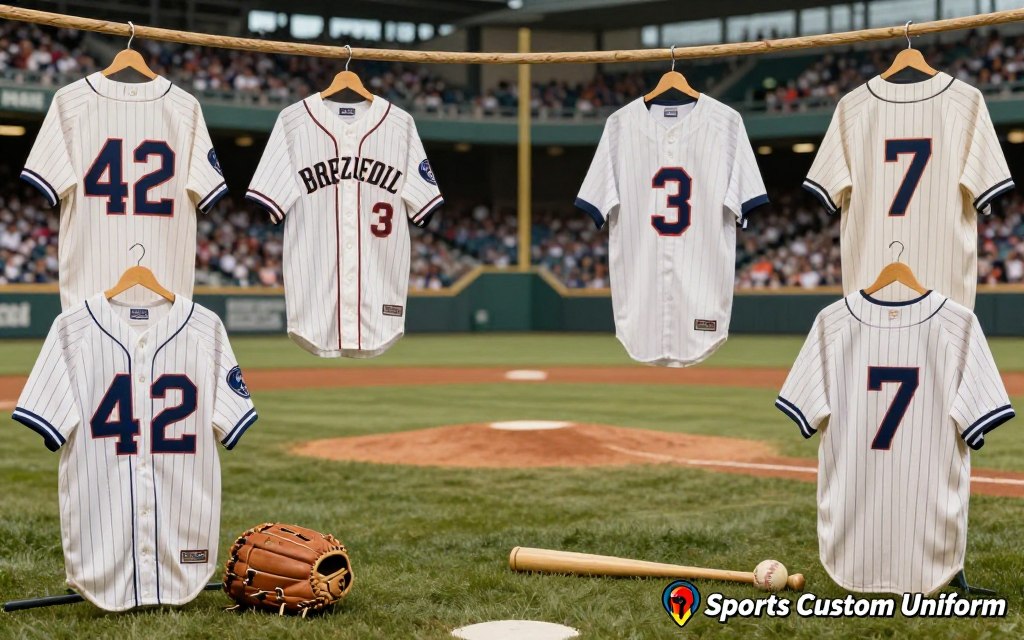
Have you ever wondered why certain numbers are so significant in the world of sports? In the realm of Major League Baseball, uniform numbers serve as more than just identifiers for players. They have evolved into symbols of personality, achievement, and team culture.
This article will delve into the fascinating history of these numbers, tracing back to the 1894 proposal for numbering and the Chicago Cubs' innovative scorecard system in 1906. Readers will discover how Lou Gehrig's number 4 became the first retired number in Major League history on July 4, 1939, forever altering the landscape of the game.
Additionally, the article will highlight Jackie Robinson's number 42, which was retired across all franchises on April 15, 1997, marking a pivotal moment in Major League history. Today, unique examples like James Karinchak's 00 and Aaron Judge's 99 showcase the evolving nature of these identifiers.

Key Takeaways
- Uniform numbers identify players and coaches uniquely.
- Lou Gehrig's number 4 was the first to be retired in MLB history.
- Jackie Robinson's number 42 is retired across all teams.
- Modern examples include unique numbers like 00 and 99.
- The history of numbering reflects changes in team culture.
Introduction to Baseball Uniform Numbers
In the realm of sports, the significance of certain numbers often piques curiosity. Uniform identifiers serve a crucial purpose in distinguishing players and coaches on the field. No two members of the same team can wear the same number, which adds to the uniqueness of each athlete.
The original proposal for numbering, put forth by James Hart in 1894, aimed to help spectators recognize players, especially when positions changed during games. This innovation has evolved significantly over the years.
Today, player and manager numbers are prominently displayed on jersey backs, while umpires showcase theirs on shirt sleeves. This distinction is essential for clarity during the game.
| Role | Number Placement | Purpose |
|---|---|---|
| Player | Back of Jersey | Identification by fans |
| Manager | Back of Jersey | Team representation |
| Umpire | Sleeve | Game regulation |
Modern baseball relies on scorecards, stadium scoreboards, and television graphics to ensure fans can easily identify players. MLB regulations mandate that back numbers be at least six inches tall, enhancing visibility from afar.
Historical Origins and Early Adoption
The history of player identification in sports is both intriguing and complex. The use of numbers has transformed how fans connect with athletes. It all began with a proposal by James Hart, reported by the St. Louis Post-Dispatch on December 29, 1894. This plan aimed to help spectators easily recognize players on the field.
In 1906, the Chicago Cubs took a significant step by printing player numbers beside names on their scorecards. This innovation allowed fans to match printed numbers with the lineup, enhancing their game experience.
First Instances on Scorecards and Jerseys
The Reading Red Roses became the first team to use numbered jerseys in 1907. This marked a pivotal moment in sports history, as it provided a visual identifier for players. Additionally, a photograph from 1909 captures Cuban Stars pitcher José Méndez wearing number 12 on his sleeve, showcasing early adoption.
The Early Experiments (1907-1916)
By June 26, 1916, the Cleveland Indians experimented with sleeve numbers during a home game. This was part of a gradual transition among Major League clubs to test visible identification systems.
Evolution of Uniform Numbering Systems
The fascinating development of identifiers for players has shaped the sports landscape. This section traces the journey from scorecard numbering and sleeve experiments to the establishment of permanent identifiers on jersey backs.
In 1929, the Cleveland Indians became the first Major League team to wear numbers on the back of their jerseys. This marked a significant shift in how players were recognized during games.
By 1937, the Philadelphia Athletics completed the league-wide adoption of numbered jerseys, solidifying this practice across American and National League teams.
In 1939, Cincinnati introduced a position-based system. They assigned pitchers numbers 30-49, outfielders 20-29, and infielders 10-19. This tradition remains, even though it has not become an official MLB rule.
As of 2024, every number from 00 through 99 has appeared in an MLB season, with the exception of Jackie Robinson’s retired 42. This evolution highlights the dynamic nature of player identifiers in modern sports.
| Year | Team | Milestone |
|---|---|---|
| 1929 | Cleveland Indians | First to wear back numbers |
| 1937 | Philadelphia Athletics | Last to adopt numbered jerseys |
| 1939 | Cincinnati Reds | Introduced position-based numbering |
Milestones in Major League Baseball Uniforms
Throughout sports history, specific digits have taken on remarkable significance, shaping the identities of teams and players alike. Two pivotal moments stand out in the narrative of uniform identifiers.
Lou Gehrig and the First Retired Number
On July 4, 1939, the New York Yankees honored Lou Gehrig by retiring his number 4. This moment marked the first time a number was retired in Major League history. It established a precedent, transforming numbers into lasting memorials rather than mere identifiers on a roster.
Jackie Robinson’s Enduring Legacy
Another landmark occurred on April 15, 1997, when Major League Baseball retired number 42 across all franchises. This action honored Jackie Robinson’s groundbreaking contributions to the sport. Players who wore 42 at that time, like Mariano Rivera, were allowed to continue using it until their retirement in 2013.
Since April 15, 2009, every participant in MLB has donned number 42 annually to celebrate Jackie Robinson Day, further cementing his legacy in the sport.
- Lou Gehrig’s number 4 became the first retired number on July 4, 1939.
- Gehrig’s retirement established numbers as permanent memorials.
- MLB retired number 42 league-wide on April 15, 1997, to honor Jackie Robinson.
- Mariano Rivera wore 42 until his retirement in 2013.
- Since 2009, number 42 is worn annually for Jackie Robinson Day.
Role of Numbers in Player Identity and Superstition
The emotional ties players have to their numbers often reflect personal milestones and inspirations. For many athletes, these digits become more than identifiers; they embody cherished memories and traditions.
For instance, Joe Beimel chose number 97 because it marked the birth year of his first child. This choice transformed a simple number into a lasting symbol of his family.
Similarly, David Wells wore number 3 in 2005, inspired by the legendary Babe Ruth. This connection illustrates how admiration for past greats can influence a player's identity.
J.T. Snow honored his father, Jack, by wearing number 84 in 2006, linking family heritage to his professional journey. Bill Voiselle, on the other hand, selected number 96 to represent Ninety Six, South Carolina, showcasing how geography can shape personal symbols.
Lastly, Omar Olivares opted for number 00, as it represented his initials. This choice demonstrates how unique numbers can communicate individual identity and personal stories.
The Significance of baseball uniform numbers in MLB History
Numbers in sports have transformed from simple labels to powerful symbols of achievement and remembrance. Over time, they have evolved into markers of sacrifice and leadership within the game.
Lou Gehrig’s number 4 established the tradition of retirement in 1939, setting a precedent for honoring player legacies. Jackie Robinson’s number 42 later became the only league-wide retired number in 1997, expanding recognition beyond individual teams.
Additionally, Adrián Beltré’s number 29 was retired by the Texas Rangers, showcasing how clubs can preserve a player’s legacy through team-specific honors. These digits connect generations, as fans often recognize historic numbers before understanding the statistics behind them.
This section highlights the distinction between league-wide honors, like Robinson's 42, and franchise-specific retirements, illustrating the unique ways teams celebrate their legends.
| Player | Number | Retirement Year |
|---|---|---|
| Lou Gehrig | 4 | 1939 |
| Jackie Robinson | 42 | 1997 |
| Adrián Beltré | 29 | 2018 |
Uniform Number Placement and Design Trends
The placement and design of player identifiers have evolved significantly over the years. Traditionally, MLB player and manager numbers are located on the back of jerseys. This standard practice ensures clear identification during games.
However, some teams have experimented with alternative placements. The Springfield Cubs pioneered front jersey numbers in 1951, followed by the Brooklyn Dodgers in 1952. These innovations aimed to enhance visibility and create a balanced design.
Another interesting case is the Houston Astros, who placed numbers on the left hip from 1975 to 1978. This move showcased how clubs explored various jersey layouts. Meanwhile, the Philadelphia Phillies removed their sleeve numbers by 2022 to accommodate sponsorship patches.
Such changes reflect the ongoing evolution of jersey design. Factors like readability, historical aesthetics, and television visibility play a significant role in these decisions. Ultimately, the visual relationship between numbers and team marks continues to shape how players are recognized on the field.
Influential Teams and Their Number Traditions
Franchises in sports often use numbers to create lasting connections with their fans. This section examines how influential teams leverage digits to link current rosters with celebrated players and their legacies.
Adrián Beltré’s retired number 29 with the Texas Rangers is a prime example. This number symbolizes the transformation of a recent star into a permanent part of team history.
In the 2026 listings, Shohei Ohtani wears number 17 for the Los Angeles Dodgers. This connection highlights how a global star aligns with a historic franchise.
Similarly, Mike Trout’s number 27 remains a significant part of the Los Angeles Angels’ identity. His long-term association with this number reflects his impact on the team.
Paul Skenes, appearing with number 30 for Pittsburgh in 2026, shows how current players continue to shape traditions for future generations.
| Player | Team | Number |
|---|---|---|
| Adrián Beltré | Texas Rangers | 29 |
| Shohei Ohtani | Los Angeles Dodgers | 17 |
| Mike Trout | Los Angeles Angels | 27 |
| Paul Skenes | Pittsburgh | 30 |
| Ozzie Albies | Atlanta | 1 |
Unique Number Exchanges and Player Anecdotes
Behind every jersey number lies a story, showcasing the personal significance for many athletes. Unique exchanges often reveal the lengths players will go to secure a number that resonates with them.
For instance, Rickey Henderson paid Turner Ward a staggering $25,000 for number 24 after joining the Toronto Blue Jays in 1993. This illustrates how valuable a familiar number can become during a team change.
Similarly, Brian Jordan gifted Fredi González a Harley-Davidson motorcycle for number 33 in Atlanta in 2005. Such memorable personal gifts highlight the emotional connections players have with their numbers.
Juan Pierre also made headlines when he bought Grady Little a motorcycle for number 9 after joining the Dodgers in 2007. These anecdotes showcase the lengths players will go to claim their desired digits.
In a more informal exchange, Mitch Williams bought number 28 from John Kruk for just $10 and two cases of beer in 1991. This quirky deal contrasts sharply with the more extravagant transactions.
Lastly, Roger Clemens changed from number 21 to 12 and eventually 22 after Paul O’Neill declined to surrender 21. This situation demonstrates how players sometimes adapt rather than purchase a number.
Impact of Retired Numbers on Baseball Culture
Retired digits in sports symbolize a connection between past legends and present players, enriching team culture. The act of retiring numbers serves as a powerful tribute to individual achievements and their lasting impact on the game.
Historic retirements, such as Lou Gehrig’s number 4 by the Yankees on July 4, 1939, and Jackie Robinson’s number 42 across MLB on April 15, 1997, set the standard for honoring excellence. These gestures not only celebrate remarkable careers but also inspire future generations.
Historic Retirements and League-wide Tributes
Teams often engage in collective acts of remembrance through memorial uniforms. For instance, Boston players donned number 6 on September 27, 2012, to honor Johnny Pesky after his passing. Similarly, Miami players wore number 16 on September 26, 2016, in tribute to the beloved José Fernández.
Club-Specific Legends and Honors
Memorial tributes extend beyond league-wide honors. The Angels wore Tyler Skaggs’ number 45 on July 12, 2019, following his death and a combined no-hitter. Pittsburgh players honored Roberto Clemente by wearing number 21 on September 9, 2020. These gestures highlight the enduring cultural power of numbers in preserving legacies.
As the Oakland Athletics prepare to honor Rickey Henderson with number 24 on March 31, 2025, the tradition of retiring numbers continues to resonate deeply within the sport.

Modern Trends and High-Number Phenomena
The significance of jersey numbers has expanded, embracing both tradition and modernity. In recent years, high numbers have gained traction among players, shifting perceptions about what constitutes a recognizable identity.
For instance, Carlton Fisk donned number 72, while Kenley Jansen chose 74, and Aaron Judge proudly wears 99. These choices demonstrate how high numbers have transitioned from being unconventional to widely accepted.
Interestingly, Blake Snell made history by wearing number 4 as a pitcher, becoming the first single-digit pitcher to appear in an All-Star Game and win the Cy Young Award. This achievement challenged the long-standing belief that pitchers should avoid single-digit numbers.
In 2024, a total of 292 players wore digits in the 60s or 70s, showcasing the evolving landscape of player identifiers. Notably, Miguel Yajure made his mark by wearing number 89 in an MLB regular-season game in 2020, marking it as the last previously unused two-digit number.
- Carlton Fisk’s 72, Kenley Jansen’s 74, and Aaron Judge’s 99 illustrate the rise of high numbers.
- Blake Snell’s number 4 defied expectations for pitchers.
- 292 MLB players sported numbers in the 60s or 70s in 2024.
- Miguel Yajure’s debut made 89 the final previously unused two-digit number.
- Trends continue with James Karinchak’s 00 and Aaron Judge’s 99 in 2026.
Strategic Use of Uniform Numbers in Game Tactics
The strategic assignment of player identifiers plays a critical role in the dynamics of the game. In earlier systems, starting players were assigned numbers 1 through 8 based on their batting order position. This method created a direct link between the digits and game strategy.
Traditionally, the backup catcher received number 9, while pitchers were given numbers 10 through 14, with the number 13 often avoided due to superstition. Cincinnati's 1939 system associated pitchers with numbers 30-49 and outfielders with numbers 20-29, offering visual clues about player roles, even though it was never made mandatory by MLB.
Today, modern managers can choose any eligible number for their players. This flexibility means that tactical decisions now remain separate from uniform-number selection, emphasizing the shift in how numbers are utilized in the sport.
Uniform Number Regulations and Exceptions
The guidelines surrounding player identifiers are both fascinating and essential for maintaining order in the game. Major League Baseball (MLB) has established specific rules to ensure consistency and clarity among teams.
One of the key regulations mandates that a uniform number on the back must measure at least six inches tall. This requirement enhances visibility for fans and officials alike, allowing for easy identification during games.
Interestingly, there are exceptions to these rules. For instance, in 2015, Alan Trammell wore number 3 as a coach while Ian Kinsler wore it as a player. This situation created a rare shared-number case since coaches are not required to have unique identifiers.
Another unique instance occurred in 1951 when Eddie Gaedel famously wore the fractional number 1/8 for the St. Louis Browns. This remains one of the most unusual uniform-number exceptions in history.
Additionally, Joe McCarthy opted for a numberless jersey while managing the Yankees and Red Sox, highlighting personal preference over convention. In a nod to history, both Boston and New York wore numberless 1912-style uniforms at Fenway Park on April 20, 2012.
- The six-inch minimum back-number requirement is essential for visibility.
- Shared-number situations, like Trammell and Kinsler's, are rare.
- Eddie Gaedel’s fractional 1/8 is a notable exception.
- Joe McCarthy's numberless jersey emphasizes personal choice.
- Historical events can lead to temporary deviations from standard practices.
Global Influence and Comparisons in Uniform Numbering
The impact of numbers in sports transcends mere identification, influencing cultural practices worldwide. In different regions, these identifiers reflect unique traditions and meanings that enhance the sport's connection to its audience.
In Japan, Nippon Professional Baseball (NPB) has its own distinctive numbering system. Developmental players often use three-digit numbers beginning with 0, 1, or 2. Examples include 101, 001, and 201, which signify their minor-league status.
Additionally, the number 18 holds a special place in Japanese baseball, typically reserved for an ace pitcher. Notable MLB pitchers such as Hiroki Kuroda and Daisuke Matsuzaka have sought this prestigious number. However, players like Yu Darvish and Masahiro Tanaka chose numbers 11 and 19 instead, demonstrating a blend of cultural significance and personal preference.
| Country | Numbering System | Significance |
|---|---|---|
| United States | One- and Two-Digit | General player identification |
| Japan | Three-Digit | Minor-league status and ace pitcher |
| Japan | 18 | Reserved for ace pitchers |
Fan Engagement and Digital Celebrations
The celebration of player numbers has evolved into a meaningful event for fans and players alike. Since April 15, 2009, every MLB uniformed participant, including coaches and umpires, has worn number 42 to honor Jackie Robinson Day. This day transforms a simple number into a powerful symbol of unity and remembrance.
In 2007, Ken Griffey Jr. received special permission to wear number 42, making a memorable statement. Additionally, all Los Angeles Dodgers personnel donned this number for the 60th anniversary of Robinson’s debut, showcasing the league's commitment to honoring his legacy.
Today, the consistent imagery of number 42 across broadcasts and social platforms creates a unified celebration. Fans engage with number-based merchandise, archival photographs, and roster pages, celebrating players beyond individual games.
Baseball-Reference’s 2026 listings further enhance this connection by organizing active players by their numbers, making it easier for supporters to engage with their favorite athletes.

Conclusion
The journey of player identifiers in sports has evolved significantly over time, reflecting deeper cultural connections. What began as practical identification devices in 1894 has transformed into a rich tapestry of history and meaning.
From the early experiments of the Reading Red Roses and José Méndez to the Cleveland Indians, the development of jersey identifiers has shaped the game. Lou Gehrig’s number 4 and Jackie Robinson’s number 42 have established a culture of retirement and remembrance that resonates deeply.
Modern examples, such as Aaron Judge’s 99 and James Karinchak’s 00, showcase ongoing innovation in player identifiers. Personal stories of athletes like Joe Beimel and Rickey Henderson reveal how these digits can embody family ties, memories, and personal journeys.
Today, these identifiers connect MLB history, team traditions, and international customs, enhancing player identity and fan engagement while celebrating annual tributes.
FAQ
What is the significance of uniform numbers in Major League Baseball?
Uniform numbers serve as a vital tool for identifying players on the field. They help fans, coaches, and officials recognize individuals during games and contribute to a player's identity within the sport.
Who was the first player to have their number retired in MLB history?
Lou Gehrig was the first player to have his number retired by a Major League team. The New York Yankees honored him by retiring number 4 in 1939, marking a significant moment in the history of uniform numbers.
Why is Jackie Robinson's number 42 so important?
Jackie Robinson's number 42 is significant because it represents his groundbreaking role as the first African American player in Major League Baseball. In 1997, MLB retired the number across all teams to honor his legacy and contributions to the sport.
How do teams decide which numbers to retire?
Teams typically retire numbers to honor players who have made significant contributions to the franchise, achieved remarkable feats, or left a lasting impact on the team's history and culture.
Are there any unique traditions regarding uniform numbers among different teams?
Yes, various teams have their own traditions regarding uniform numbers. For instance, the New York Yankees are known for their rich history of retired numbers, while the Chicago White Sox have a tradition of honoring players with unique number assignments.
What are some modern trends in uniform numbering?
Modern trends include the rise of non-traditional and high numbers, as players seek to stand out or honor personal connections. Teams are also exploring innovative designs and placements for numbers on jerseys.
How do players feel about their uniform numbers?
Many players develop emotional attachments to their numbers, often viewing them as part of their identity. Some have personal traditions or superstitions linked to their assigned numbers, which can enhance their performance on the field.
What are the regulations regarding uniform numbers in MLB?
Major League Baseball has conventional rules regarding numbering systems, including restrictions on certain numbers and guidelines for how they should be displayed. However, exceptions can occur, particularly in unique program cases.
How do international teams approach uniform numbering?
International teams may adopt different practices and cultural variations regarding uniform numbering. These differences can reflect local traditions, player preferences, and the overall culture of the sport in their region.
How do fans engage with uniform numbers?
Fans often celebrate uniform numbers through merchandise, social media, and events. Digital platforms allow for creative expressions, such as sharing stories or tributes related to their favorite players' numbers.


