

Cart
0
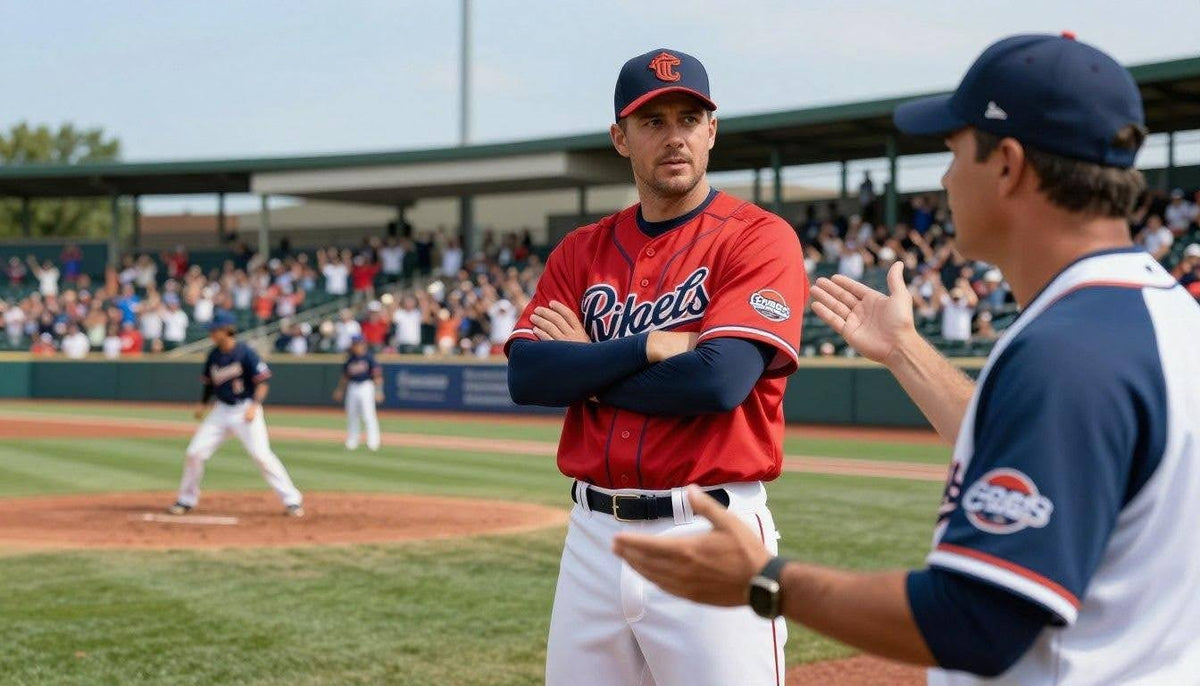
Have you ever wondered about the tradition of baseball managers dressing like players? This unique practice sets baseball apart from other major sports, where coaches usually wear sideline apparel rather than the same game uniform as the athletes.
In baseball, the manager's role is more than just a title. It is deeply connected to the sport's history. For generations, managers have worn team jerseys, pants, and caps, creating a visual link between the person leading the club and the players on the field.
The tradition has lasted for well over a century, but there is an important detail that is often misunderstood: Major League Baseball does not explicitly require managers to wear a player-style uniform. MLB's own explanation notes that its rulebook requires coaches to be in uniform when applicable but does not establish the same direct dress requirement for managers.
Instead, the custom survives largely because baseball's earliest managers were often players themselves. Over time, wearing the uniform became part of the sport's identity.
From the dugout to mound visits and conversations with umpires, matching team clothing also makes a manager instantly recognizable as part of the club. This article explores how that tradition began, why it continued, and what baseball uniforms communicate about leadership, identity, and team culture.
Key Takeaways
- MLB managers traditionally wear the same style of uniform as players.
- The custom grew from baseball's early player-manager tradition.
- MLB's rulebook does not explicitly mandate a specific managerial dress code.
- Uniforms visually connect managers with their team on the field.
- Managers combine strategic, administrative, and on-field responsibilities.
- The tradition has become one of baseball's most recognizable cultural features.
Origins of the MLB Manager Uniform Tradition
The practice of baseball managers wearing player-style clothing has deep historical roots.
In the early years of organized baseball, the distinction between a player and a manager was much less rigid than it is today. Many managers were player-managers, meaning they competed on the field while also making lineup, strategy, and personnel decisions.
For someone who might manage one inning and play the next, wearing the same uniform as everyone else was simply practical.
The National Baseball Hall of Fame notes that player-managers were once common in professional baseball. The practice dates back to the 19th century, while Pete Rose, who managed the Cincinnati Reds while playing from 1984 to 1986, became the most recent Major League player-manager.
The source article traces baseball's early uniform tradition to the New York Knickerbockers in 1849, describing blue wool pants, white flannel shirts, and straw hats. Baseball uniforms soon evolved into an established part of organized team identity.
Another fascinating example is Connie Mack. Although he began as a player and later became one of baseball's legendary managers, Mack famously broke with the uniform tradition and managed the Philadelphia Athletics in a business suit. The Baseball Hall of Fame describes his trademark suit as part of his distinctive managerial image.
So the answer to why do MLB managers wear uniforms is not simply "because the rules say so." The stronger explanation is that baseball's leadership role evolved directly from players who also managed, and the clothing tradition remained even after those roles separated.

Practical Reasons for Dressing Like Players
The choice also has practical value beyond history.
Baseball managers regularly leave the dugout during a game. Depending on the situation, they may:
- Visit the mound.
- Signal or confirm a pitching change.
- Speak with umpires.
- Check on an injured player.
- Communicate with coaches and players.
- Participate in other permitted on-field conferences.
When a manager steps onto the field, matching team clothing makes that person immediately recognizable as part of the club.
This does not mean recognition is the legal reason managers must wear uniforms, because, again, MLB does not expressly impose such a managerial dress requirement. It is better understood as a practical benefit of a tradition that already existed.
Baseball Managers vs. Coaches in Other Sports
| Aspect | Baseball | Basketball / Football |
|---|---|---|
| Typical Leadership Attire | Player-style team uniform | Sideline or team-branded apparel |
| On-Field Presence | Manager may enter field during permitted situations | Coaches generally remain in designated sideline areas |
| Visual Relationship to Players | Closely matches player appearance | Usually visually distinct from players |
| Tradition | Strong historical link to player-managers | Coaching attire developed separately |
The difference gives baseball a visual culture that is instantly recognizable.

Why Do MLB Managers Wear Uniforms Today?
Today, seeing a manager in a jersey, baseball pants, and cap feels completely normal because the practice has become part of the sport itself.
MLB has even published its own explanation of the question, noting the historical importance of player-managers and famous exceptions such as Connie Mack. MLB also makes clear that its rulebook has never officially imposed a specific managerial dress code. Why MLB Managers Wear Uniforms - MLB
Rule 4.07, for example, says that the people permitted on the playing field include "players and coaches in uniform" and then lists "managers" separately. That wording is one reason MLB itself says the rule does not explicitly require managers to dress like players.
The uniform nevertheless serves several cultural and visual purposes.
It identifies the manager as part of the team rather than as an executive watching from outside the playing group. It maintains continuity with earlier generations of baseball leadership. It also creates a unified visual identity among managers, coaches, and players.
The custom extends beyond Major League Baseball. Similar manager and coaching uniforms are common across college, high school, travel, and youth baseball, although exact dress rules vary by league.
| Aspect | Baseball | Many Other Sports |
|---|---|---|
| Manager / Coach Appearance | Often closely matches team uniform | Usually distinct sideline clothing |
| Field Interaction | Manager regularly enters playing field when permitted | Usually more limited |
| Historical Connection | Direct link to player-manager era | Different coaching traditions |
| Team Visual Identity | Manager appears as part of uniformed team group | Coach often visually separated |
Uniform Elements and Design Features in Baseball
Baseball uniforms are not just clothing. They communicate team history, identity, hierarchy, and visual recognition.
The key elements traditionally include:
- Jersey
- Baseball pants
- Cap
- Socks
- Cleats or athletic footwear
- Team colors
- Logos
- Player or staff numbers
Some accessories vary by role and position, but the core jersey, pants, and cap combination creates the recognizable baseball silhouette.
How Baseball Uniform Numbers Evolved
Numbering did not always exist.
The Cleveland club experimented with numbers on sleeves in 1916. Then, in 1929, Cleveland and the New York Yankees helped establish numbers on the backs of uniforms as a lasting Major League practice.
The National Baseball Hall of Fame explains that experiments with jersey numbers occurred throughout the 1910s and 1920s before back numbers took hold in 1929 and spread across the league within the following years. History of Baseball Uniform Numbers - Hall of Fame
The source also highlights later developments:
- By the early 1930s, back numbers had become standard across Major League Baseball.
- The Brooklyn Dodgers introduced front numbers in 1952.
- The Chicago White Sox introduced player names on road jerseys in 1960.
- Caps evolved from early 19th-century styles into today's familiar peaked designs.
- Modern cleats increasingly use team colors and player-specific styling.
From Traditional Baseball Uniforms to Modern Custom Designs
The same principles that made baseball uniforms important historically still matter to today's school, travel, recreational, and competitive teams: recognition, team identity, consistent colors, visible numbers, and a unified appearance.
Teams designing their own uniforms can apply those ideas through Custom Baseball Uniform Sublimated from Sports Custom Uniform. The product supports team names, player names, numbers, logos, custom colors, jersey styles, and sublimated graphics, making it a natural modern extension of baseball's long uniform tradition.
For more design inspiration, the earlier Sports Custom Uniform guide Baseball Uniform Design Ideas for Teams That Stand Out explores modern color blocking, vintage influences, gradients, number visibility, durability, and team consistency.

How Baseball Uniforms Changed Over Time
The evolution of baseball clothing mirrors the development of the sport itself.
Early uniforms were relatively simple. As professional baseball expanded, teams began using more sophisticated combinations of numbers, logos, lettering, trim, home-and-road color systems, and alternate designs.
Modern uniforms also place far greater emphasis on:
- Lightweight materials
- Moisture management
- Player mobility
- Durable graphics
- Color consistency
- Branding
- Number visibility
- Custom fit
In 2024, MLB introduced a new generation of Nike-designed and Fanatics-manufactured uniforms. The rollout generated substantial discussion around lettering, numbers, fit, and appearance, showing that even after more than a century, baseball uniform design remains a meaningful part of the sport's culture.
For readers interested in the broader progression from early heavy sportswear to modern performance apparel, Sports Custom Uniform's previous article The Evolution of Sports Uniforms: From Basic to Fully Custom Designs explores how materials, technology, logos, sublimation, and customization changed athletic uniforms over time.

Influence of Tradition on Today's Baseball Culture
The enduring legacy of player-style clothing reaches beyond managers.
Coaches and other uniformed baseball personnel often share a visual identity with the players, helping preserve the sport's distinctive appearance.
Logos and design details also carry enormous cultural weight.
The Detroit Tigers' Old English-style "D," the Athletics' familiar "A," and the New York Yankees' iconic pinstriped home look demonstrate how uniform elements can become symbols larger than any individual player.
Throwback uniforms reinforce the connection further. Older typography, stockings, vintage striping, and historical color combinations allow modern teams to reference earlier eras while still using contemporary materials.
Uniform tradition also extends into fan culture. Replica jerseys, caps, and other team apparel allow supporters to visually identify with their clubs.
| Element | Baseball Example | Significance |
|---|---|---|
| Player-Style Clothing | Managers and team personnel | Connection to baseball tradition |
| Team Logos | Historic lettermarks and emblems | Builds instant team recognition |
| Pinstripes / Signature Designs | Long-running franchise looks | Reinforces visual legacy |
| Throwback Uniforms | Historic colors and styling | Connects modern fans with earlier eras |
| Replica Apparel | Jerseys and caps | Extends team identity to supporters |
For teams building their own identity, this is the same principle behind modern custom baseball uniforms: colors, typography, numbers, logos, and consistent styling work together to make a team recognizable before the first pitch is thrown.
Conclusion
The unique practice of baseball managers dressing in team uniforms reflects one of the sport's deepest traditions.
Its roots are closely connected to the era of player-managers, when the person making strategic decisions could also be an active player. Because those managers needed playing uniforms, the appearance became associated with baseball leadership.
The player-manager role eventually became rare, but the uniform remained.
Importantly, MLB's own explanation confirms that the current rulebook does not explicitly require managers to wear player-style uniforms. The custom survives because generations of managers continued it, making the look part of baseball culture itself.
Matching team apparel also provides a practical visual benefit when managers leave the dugout to speak with players or umpires. More broadly, the uniform reinforces identity, tradition, and the idea that the manager remains part of the team rather than separate from it.
Modern logos, numbers, materials, throwback styles, and custom designs keep that heritage evolving rather than frozen in the past.
For teams that want to carry the same sense of visual identity onto their own field, Sports Custom Uniform offers customizable baseball uniforms and jerseys designed around team colors, logos, names, and numbers.
Frequently Asked Questions
What is the historical significance of managers dressing like players?
The tradition dates back to baseball's early player-manager era. Managers frequently played for the same teams they led, so wearing the player uniform was practical.
As dedicated non-playing managers became more common, the clothing tradition remained and eventually became one of baseball's recognizable customs. The Baseball Hall of Fame notes that player-managers were once common in Major League Baseball.
How does wearing a uniform affect team dynamics?
Matching clothing visually places the manager inside the same team identity as the players and coaches.
It can reinforce unity and make the manager immediately recognizable during on-field interactions, although team performance obviously depends on far more than clothing.
Are there specific rules requiring MLB managers to wear uniforms?
No explicit MLB rule requires a manager to wear the same uniform as players.
MLB's own explanation states that the rulebook has never officially mandated a particular managerial dress code. Rule 4.07 mentions "players and coaches in uniform" and then lists managers separately.
This corrects the original draft's statement that MLB rules specifically require managers to wear full team attire.
What elements are typically included in a baseball manager's uniform?
A modern baseball manager typically wears a team jersey, baseball pants, cap, belt, socks, and appropriate footwear.
The colors, logos, lettering, and sometimes numbers generally coordinate with the uniforms worn by the team.
How has the design of manager uniforms evolved over time?
Manager uniforms have evolved alongside player uniforms.
Heavy early fabrics gave way to lighter performance materials, while logos, numbers, lettering, color systems, alternate jerseys, and modern fabrication techniques changed the appearance of baseball apparel.
The basic idea, however, remains recognizable: managers still look visually connected to the team they lead.
Why is tradition important in baseball culture?
Baseball places unusual emphasis on continuity between generations.
Uniforms, logos, numbers, ballparks, statistical records, and throwback designs help connect current teams with the sport's long history. The manager wearing a team uniform is one visible part of that continuity.


